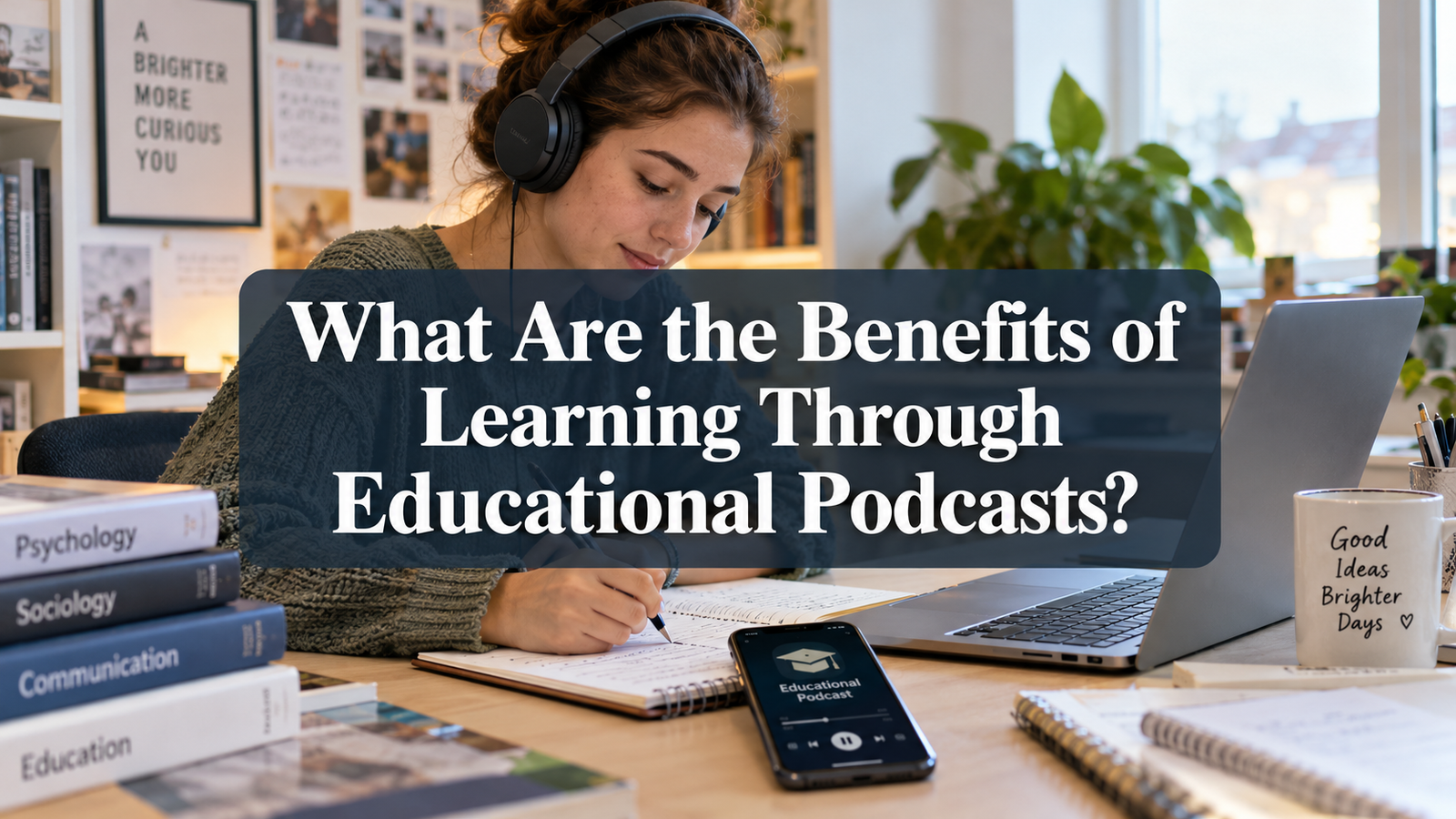
Education has changed in many ways over the years. Students no longer depend only on textbooks, classroom lectures, and handwritten notes to understand new subjects. Technology has introduced several learning methods that make education more accessible and interesting. One of these methods is learning through educational podcasts.
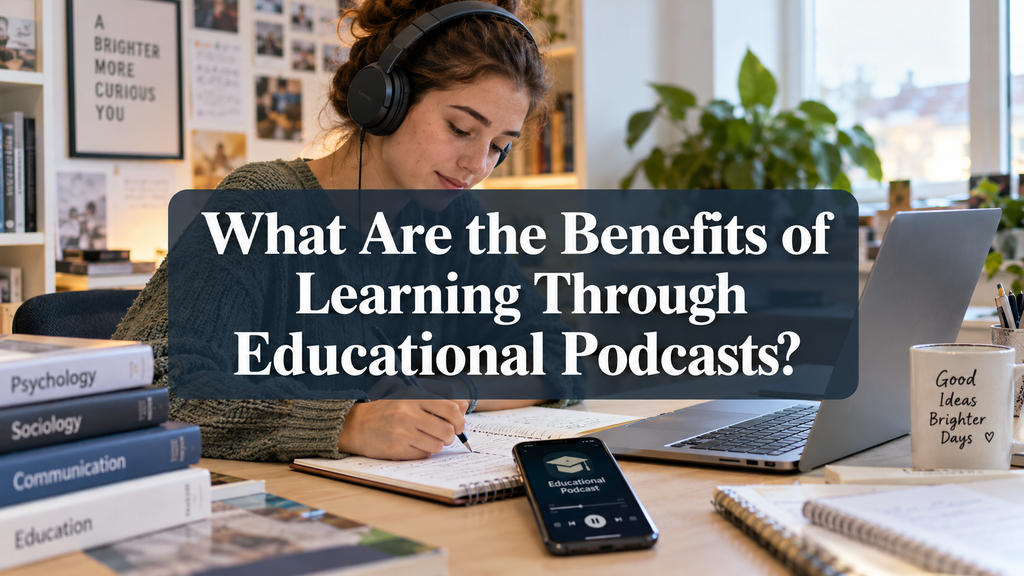
Educational podcasts are audio programs that explain different topics, share useful information, and help listeners develop knowledge. They cover subjects such as science, history, literature, mathematics, technology, language learning, and personal development. Students can listen to these programs using smartphones, computers, or other digital devices.
The greatest advantage of educational podcasts is their flexibility. Students can listen while traveling, walking, exercising, or completing simple daily activities. This makes learning possible even outside traditional classrooms.
After exploring different educational methods, I believe podcasts offer an interesting opportunity to improve understanding and develop independent learning habits. They do not replace teachers or textbooks, but they can make the learning process more convenient and enjoyable.
In this article, we will explore the major benefits of learning through educational podcasts and understand how students can use them effectively.
What Are Educational Podcasts?
Educational podcasts are recorded audio discussions, lessons, interviews, or explanations created to share knowledge with listeners.
Some podcasts are produced by teachers and educational institutions, while others are created by researchers, professionals, and subject experts.
For example, a science podcast may explain how the human body works, while a history podcast may discuss important historical events. Language learning podcasts often include conversations that help students understand pronunciation and improve vocabulary.
Most educational podcasts are available through websites and podcast applications. Many are free, although some offer additional content through paid subscriptions.
Unlike traditional classroom lessons, podcasts allow students to control when and where they listen. They can pause a recording, repeat difficult explanations, and choose topics according to their interests.
This flexibility makes educational podcasts a valuable learning resource for students of different ages.
1. Educational Podcasts Make Learning More Flexible
One of the biggest benefits of educational podcasts is that students can learn according to their personal schedules.
Traditional education usually follows fixed classroom hours. Students must attend lessons at particular times and complete activities according to a timetable.
Educational podcasts provide greater freedom.
A student can listen to a recorded lesson early in the morning, during an afternoon break, or before going to sleep.
For example, a student preparing for a science examination may listen to an explanation of the solar system while traveling to school.
This flexibility is especially useful for students who manage several responsibilities, including homework, extracurricular activities, and family commitments.
However, difficult subjects still require focused attention. Listening while performing complicated tasks may reduce understanding.
By selecting suitable listening times, students can include educational podcasts in their daily routines without disturbing their regular studies.
2. Podcasts Help Students Improve Listening Skills
Listening is an important part of successful learning.
Students need strong listening skills to understand classroom instructions, follow discussions, and remember important explanations.
Educational podcasts provide regular opportunities to practice attentive listening.
When students listen to a podcast, they concentrate on spoken information rather than relying entirely on written material.
They learn to identify important ideas, understand explanations, and recognize connections between different concepts.
For example, a student listening to a history podcast may need to understand the sequence of events and remember the reasons behind important decisions.
With regular practice, students may become better at following spoken explanations.
They can also improve their ability to recognize changes in tone, identify supporting examples, and understand the main message of a discussion.
These abilities are useful during classroom lectures, presentations, and everyday communication.
3. Educational Podcasts Support Independent Learning
Independent learning means taking responsibility for developing personal knowledge and understanding.
Educational podcasts encourage students to explore subjects without depending completely on classroom instruction.
A student who becomes interested in astronomy can search for educational podcasts about planets, stars, galaxies, and space exploration.
Similarly, someone interested in literature can listen to discussions about famous authors and their works.
This freedom allows students to explore topics beyond their school curriculum.
Independent learning also encourages curiosity.
When students discover interesting information, they often develop new questions and become motivated to learn more.
For example, listening to a podcast about renewable energy may encourage a student to research solar panels, wind turbines, and environmental protection.
Over time, this habit can help students become more responsible and confident learners.
4. Podcasts Make Difficult Topics Easier to Understand
Some academic subjects contain complicated ideas that students struggle to understand through textbooks alone.
Educational podcasts can present these ideas through simple explanations, everyday examples, and meaningful discussions.
A teacher explaining a difficult scientific concept through audio may use familiar situations to make the topic easier to imagine.
For example, a podcast about gravity might explain why objects fall toward the ground or how planets remain in orbit.
Such explanations can help students connect theoretical knowledge with real experiences.
Podcasts also allow learners to revisit difficult sections.
If a student does not understand an explanation the first time, the recording can be paused and played again.
This repeated exposure may improve understanding, especially when combined with reading, note taking, and practice questions.
However, subjects involving complicated diagrams, mathematical calculations, or visual demonstrations may require additional learning materials.
Podcasts are most useful when they complement other educational resources.
5. Students Can Learn at Their Own Pace
Every student learns differently.
Some students understand new information quickly, while others need additional explanations and more time to process difficult concepts.
Educational podcasts support different learning speeds because listeners control the recordings.
Students can pause a podcast whenever they need to think about an important point.
They can also replay an explanation several times until they feel comfortable with the concept.
For example, a student learning English grammar may need to listen repeatedly to understand the difference between different verb tenses.
Another student may understand the explanation immediately and continue to the next topic.
Some podcast applications also provide playback speed controls.
These features allow students to adjust the listening experience according to their needs.
Learning at a comfortable pace may reduce frustration and encourage students to remain engaged with their studies.
6. Educational Podcasts Improve Language Learning
Educational podcasts are particularly useful for students learning a new language.
Language development requires regular exposure to pronunciation, vocabulary, sentence structure, and natural conversation.
Podcasts provide opportunities to hear how a language is spoken.
For example, students learning English can listen to conversations about education, travel, daily routines, and general knowledge.
This exposure may help them recognize commonly used expressions and understand different speaking styles.
Language podcasts can also introduce new vocabulary in meaningful situations.
Instead of memorizing isolated words, students hear how those words are used in complete sentences.
A useful practice is to listen to a short conversation and repeat selected sentences aloud.
Students can also write unfamiliar words in a notebook and review their meanings later.
Regular listening, combined with speaking and reading practice, can gradually improve language confidence and comprehension.
7. Podcasts Encourage Curiosity and Interest in Learning
Students often learn more effectively when they feel interested in a subject.
Educational podcasts can make academic topics enjoyable by presenting information through stories, interviews, and engaging conversations.
A history lesson may become more interesting when a podcast describes the experiences of people who lived during an important historical period.
Similarly, a science podcast may discuss surprising discoveries or answer common questions about nature.
These approaches can encourage students to explore subjects they previously considered difficult or boring.
For example, a student who rarely reads about geography may become interested after listening to a podcast explaining volcanoes, oceans, or unusual natural environments.
Curiosity is important because it encourages learners to ask questions and search for answers.
Educational podcasts can help develop this curiosity by introducing new ideas in an accessible format.
8. Educational Podcasts Provide Access to Different Perspectives
Classroom learning usually involves a limited number of teachers and textbooks.
Educational podcasts can introduce students to a wider range of opinions, experiences, and explanations.
Many podcasts feature interviews with scientists, writers, educators, researchers, and other professionals.
Listening to these discussions allows students to understand how different people approach the same subject.
For example, a podcast about environmental conservation may include discussions with researchers, farmers, and environmental educators.
Each person may explain the topic from a different perspective.
This variety can encourage students to think critically and consider several viewpoints before forming conclusions.
However, not every podcast provides accurate information.
Students should examine the qualifications of speakers, check important claims, and compare information with reliable educational sources.
Learning to evaluate information is itself an important educational skill.
9. Podcasts Can Make Study Time More Productive
Students sometimes struggle to find additional time for learning.
Educational podcasts can help them use certain parts of their daily routines more effectively.
For example, students may listen to short educational programs while walking, traveling as passengers, or performing simple household tasks.
This does not mean students should constantly study or avoid necessary rest.
Instead, podcasts provide an optional learning opportunity during suitable moments.
A student who spends twenty minutes traveling to school might listen to a short discussion about a subject already covered in class.
The recording may refresh important concepts and introduce useful examples.
However, multitasking is not always effective.
Students should avoid listening during activities that require complete concentration, especially driving or situations where safety is important.
For challenging topics, listening in a quiet environment is usually more productive.
10. Educational Podcasts Support Revision and Exam Preparation
Revision is an essential part of academic success.
Students need to review information regularly to strengthen understanding and identify areas requiring additional practice.
Educational podcasts can support revision by providing spoken explanations of previously studied material.
For example, before a biology examination, a student may listen to a podcast discussing human digestion, respiration, or plant reproduction.
Hearing familiar information explained in a different way can help reinforce important concepts.
Podcasts may also make revision feel less repetitive.
Instead of reading the same textbook section repeatedly, students can alternate between reading and listening.
A practical method is to listen to a podcast, close the recording, and summarize the main ideas without looking at notes.
This approach combines listening with active recall.
Students should remember that podcasts alone are not enough for comprehensive examination preparation.
Written exercises, practice tests, textbook revision, and teacher guidance remain important.
11. Podcasts Are Often Affordable and Easily Accessible
Educational resources can sometimes be expensive.
Textbooks, private tuition, and specialized learning programs may require considerable financial investment.
Many educational podcasts are freely available online, making them an affordable learning option.
Students can access numerous programs using a smartphone or computer with an internet connection.
Some applications allow episodes to be downloaded for offline listening.
This feature is useful for students with limited or unreliable internet access.
For example, a student can download several lessons when internet service is available and listen later without remaining connected.
However, accessibility depends on device availability, internet costs, language options, and individual learning needs.
Schools can support wider access by recommending free resources and providing suitable devices or shared learning facilities where possible.
12. Educational Podcasts Introduce Students to Real World Knowledge
Academic textbooks provide important foundational knowledge, but students also benefit from understanding how classroom subjects connect with everyday life.
Educational podcasts often discuss practical examples and real situations.
A mathematics podcast may explain how percentages are used in shopping discounts or financial planning.
A science podcast may explore the relationship between nutrition, agriculture, and the environment.
Similarly, a technology podcast might describe how computers, digital communication, and artificial intelligence influence modern workplaces.
These examples help students recognize the practical value of education.
When learners understand why a subject matters, they may become more motivated to study it.
Podcasts can also introduce students to different professions and career paths.
Listening to experienced professionals describe their work may help students discover new interests and make better informed educational decisions.
How Can Students Use Educational Podcasts Effectively?
Although educational podcasts offer many advantages, students need a clear approach to gain meaningful benefits.
Simply playing a recording does not guarantee that learning will take place.
Students should select podcasts related to their academic goals and choose programs that explain information clearly.
It is also important to use reliable sources, especially when studying scientific, historical, or technical subjects.
The following practices can improve the learning experience:
- Choose relevant topics: Select podcast episodes that support classroom lessons or personal educational interests.
- Create a listening schedule: Set aside a reasonable amount of time for focused listening.
- Take useful notes: Write down important concepts, examples, and unfamiliar terms.
- Repeat difficult explanations: Replay sections that require additional attention.
- Summarize what you learned: Explain the main points in your own words after listening.
- Verify important information: Compare podcast claims with textbooks and trustworthy educational resources.
- Apply new knowledge: Use the information in assignments, discussions, or practical exercises.
These habits transform podcast listening from a passive activity into a more active learning experience.
Are There Any Limitations of Educational Podcasts?
Educational podcasts are useful, but they also have limitations.
One challenge is the lack of visual explanations.
Subjects involving maps, complex diagrams, chemical structures, or detailed mathematical procedures may be difficult to understand through audio alone.
Another challenge is distraction.
Students who listen while using social media or performing demanding activities may fail to remember important details.
Podcast quality also varies.
Some programs provide carefully researched information, while others contain outdated facts, unsupported opinions, or unclear explanations.
Furthermore, podcasts generally do not provide immediate interaction with teachers.
Students cannot always ask questions or receive personalized feedback when they misunderstand a concept.
For these reasons, educational podcasts should be considered a supporting learning resource rather than a complete replacement for traditional educational methods.
Combining podcasts with textbooks, classroom discussions, and practical exercises creates a more balanced approach.
Frequently Asked Questions About Educational Podcasts
Are educational podcasts useful for school students?
Yes, educational podcasts can help school students understand academic subjects, improve listening skills, and explore new ideas. Students should choose age appropriate content that matches their learning level.
Can educational podcasts improve academic performance?
Educational podcasts may support academic performance by improving understanding, encouraging revision, and developing independent learning habits. Their effectiveness depends on content quality, focused listening, and how students apply what they learn.
How long should students listen to educational podcasts?
There is no single listening duration suitable for everyone. Many students may find short sessions of fifteen to thirty minutes manageable, depending on the difficulty of the topic and their concentration.
Can podcasts replace textbooks?
No, podcasts are better used alongside textbooks and classroom learning. Textbooks provide structured explanations, illustrations, and exercises that audio recordings may not include.
What subjects can students learn through podcasts?
Students can explore science, history, geography, literature, languages, mathematics, technology, economics, and many other educational subjects. The availability and depth of lessons vary between podcast programs.
Conclusion
Learning through educational podcasts offers several benefits for students who want to expand their knowledge and develop better study habits.
Podcasts make education more flexible, improve listening skills, encourage independent learning, and provide opportunities to explore subjects beyond traditional classroom lessons.
They can also support language development, examination revision, critical thinking, and understanding of real world applications.
One of their greatest strengths is that students can learn at a comfortable pace and revisit explanations whenever necessary.
However, effective learning requires more than listening. Students should select trustworthy educational content, take notes, review important information, and connect podcast lessons with their regular studies.
Educational podcasts work best when they complement textbooks, teachers, and classroom activities.
As digital education continues to develop, podcasts can remain a practical and accessible resource for students who want to make learning a meaningful part of everyday life.