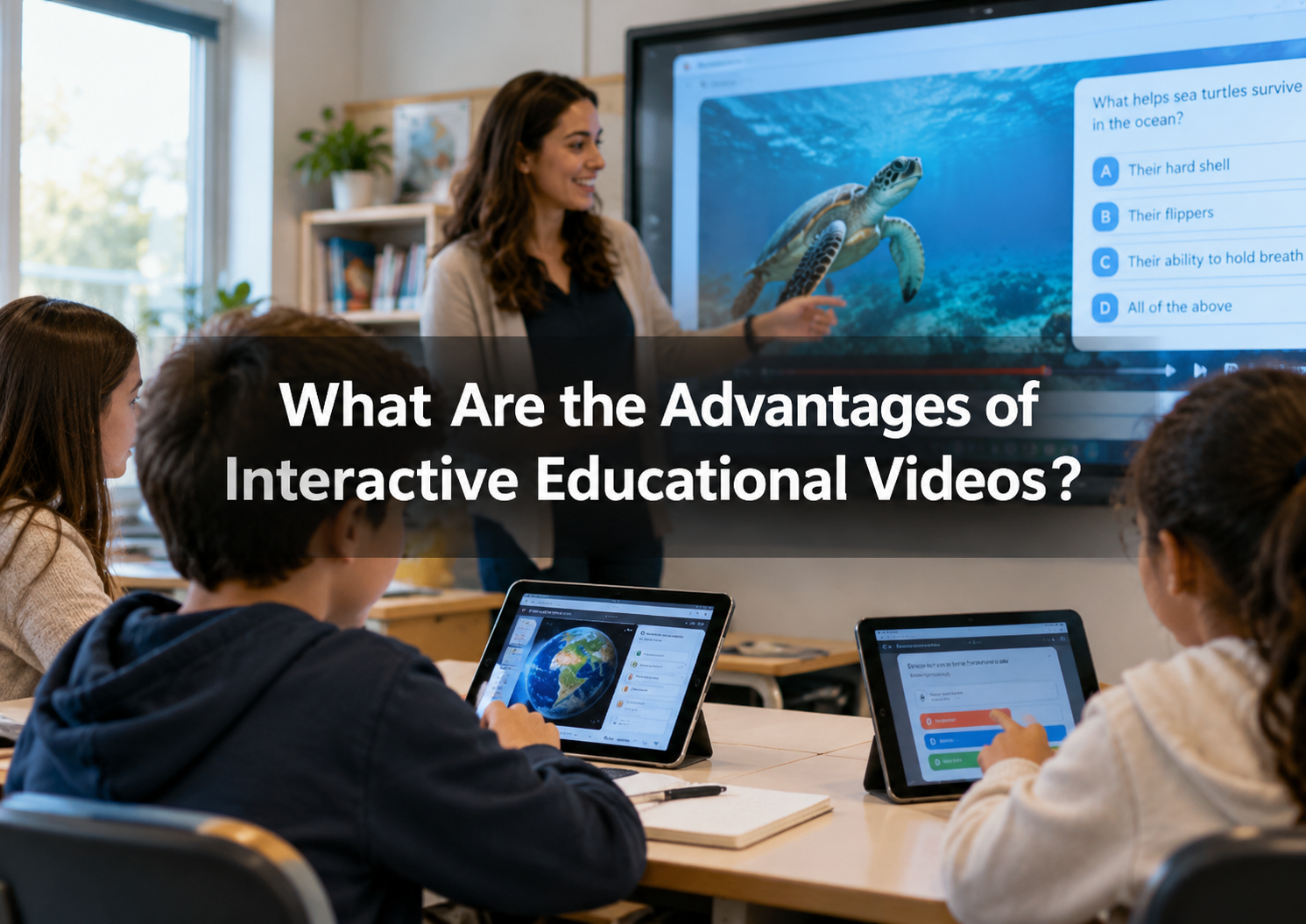
Education has changed significantly with the development of digital technology. Students are no longer limited to textbooks, classroom lectures, and handwritten notes. Today, different digital learning resources help students understand lessons in more interesting and practical ways. One of the most useful developments in modern education is the growing use of interactive educational videos.
Interactive educational videos provide a learning experience that goes beyond simply watching information on a screen. These videos allow students to participate in lessons through questions, quizzes, clickable activities, and other learning features. Instead of remaining passive viewers, students become active participants in the educational process.
The advantages of interactive educational videos include better student engagement, improved understanding, stronger memory, flexible learning opportunities, and immediate feedback. Teachers can also use these videos to explain complicated subjects and understand how well students are progressing.
Understanding how interactive educational videos support learning can help teachers, parents, and students make better use of digital education.
What Are Interactive Educational Videos?
Interactive educational videos are digital learning materials that encourage viewers to participate while watching educational content. Unlike traditional videos that play continuously, interactive videos include features that require students to respond, make decisions, or complete small activities.
For example, a science teacher might create a video explaining the human digestive system. During the lesson, the video pauses and asks students to identify the function of the stomach. Students select an answer before continuing to the next section.
This simple activity encourages students to think about the lesson rather than watching without paying attention.
Interactive educational videos may include multiple choice questions, short exercises, clickable diagrams, chapter navigation, and practical examples.
These features make learning more engaging and allow students to check their understanding throughout the lesson.
1. Interactive Educational Videos Increase Student Engagement
One of the greatest advantages of interactive educational videos is their ability to capture and maintain student attention.
Traditional classroom lectures sometimes become difficult to follow, especially when teachers explain lengthy or complicated topics. Students may lose concentration when they only listen without participating.
Interactive videos create opportunities for students to become involved in the learning process.
For example, a geography video might ask students to identify different countries on a map. Instead of simply watching the teacher explain geographical locations, students actively participate by choosing answers.
This participation makes lessons more interesting and encourages students to remain focused.
When students know that questions or activities may appear during a video, they have a reason to pay closer attention to the information being presented.
However, interactive activities should support the lesson rather than distract students from important concepts.
2. They Help Students Understand Difficult Concepts
Some educational subjects contain ideas that are difficult to understand through written explanations alone.
Science, mathematics, geography, and technology often involve processes that become clearer when students can see them.
Interactive educational videos combine visual explanations with participation, making complicated information easier to understand.
For example, students learning about the water cycle can watch an animation showing evaporation, condensation, and precipitation.
The video can pause after each stage and ask students to identify what happens next.
This approach helps students connect visual information with important scientific concepts.
Similarly, mathematics videos can demonstrate how to solve an equation step by step. Students may be asked to calculate the next step before the answer appears.
By combining explanations with practice, interactive videos help learners develop a clearer understanding of challenging subjects.
3. Interactive Videos Improve Knowledge Retention
Remembering information is an important part of successful learning.
Students sometimes understand a lesson while listening to a teacher but forget important details later.
Interactive educational videos can support memory by encouraging students to recall information during the learning process.
When students answer questions, identify objects, or complete exercises, they actively work with the information they have learned.
For example, a history video explaining an important event might pause and ask students to remember the year in which it happened.
This activity encourages learners to retrieve information from memory.
Retrieval practice is a useful learning technique because it strengthens students’ ability to remember previously studied material.
Interactive videos can also combine spoken explanations, written information, and relevant illustrations.
When these elements are designed carefully, they help students understand and remember lessons more effectively.
4. Students Can Learn at Their Own Pace
Every student has a different learning speed.
Some students understand new information quickly, while others need additional explanations and practice.
One major benefit of interactive educational videos is that students can often control their learning pace.
They can pause a lesson, replay a difficult section, or review an explanation before moving forward.
For example, a student learning English grammar may understand nouns easily but need more practice with verb tenses.
An interactive video allows the student to spend additional time reviewing the difficult topic.
Students can also repeat quizzes or exercises when the platform supports this feature.
This flexibility helps learners build confidence without feeling pressured to understand everything immediately.
Learning at an individual pace can be especially useful during homework, revision, and independent study.
5. They Provide Immediate Feedback
Feedback helps students understand what they have learned correctly and which areas need improvement.
In traditional learning situations, students sometimes have to wait until their teacher checks assignments or examinations.
Interactive educational videos can provide feedback immediately after students answer questions.
For example, a mathematics video may ask students to solve a problem.
If a student selects an incorrect answer, the video might explain the correct method and encourage another attempt.
This immediate response helps students recognize mistakes while the lesson is still fresh in their minds.
It also creates opportunities to correct misunderstandings before moving to more advanced topics.
Effective feedback should explain why an answer is correct or incorrect rather than simply displaying a score.
When feedback is meaningful, interactive videos become valuable tools for learning and improvement.
6. Interactive Educational Videos Encourage Active Learning
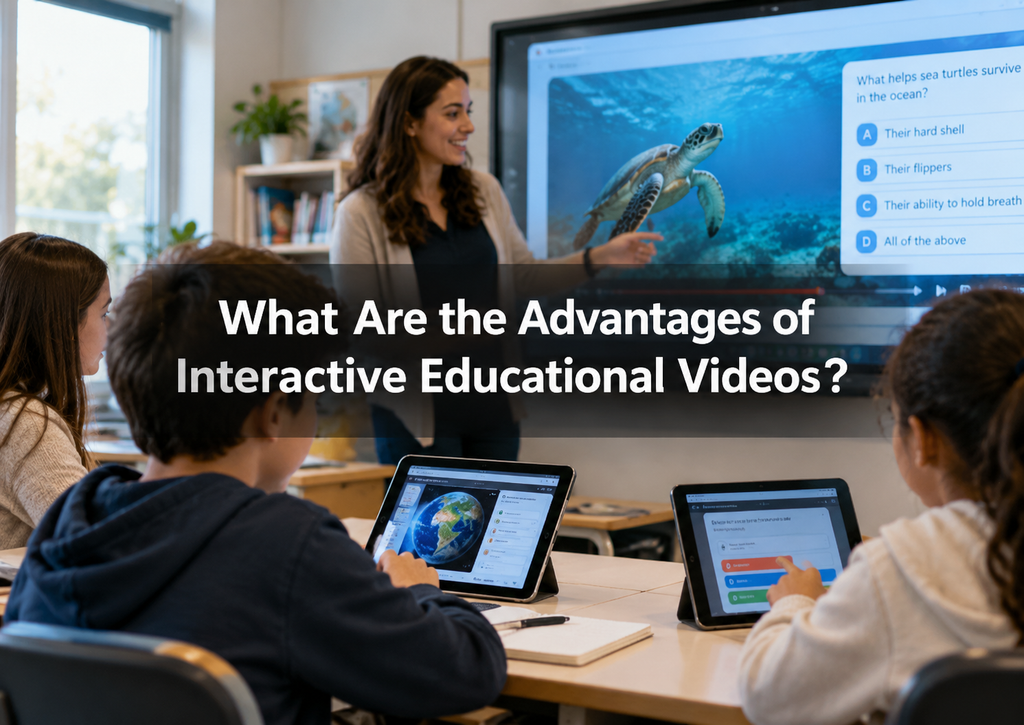
Active learning happens when students participate in activities that require thinking, questioning, and problem solving.
Interactive educational videos support this approach by making participation part of the lesson.
Instead of watching information passively, students may need to predict results, compare options, or apply knowledge.
For example, a science video could explain how plants grow under different environmental conditions.
Before showing the results of an experiment, the video might ask students to predict which plant will grow better.
Students must consider the information they have learned before selecting an answer.
This encourages independent thinking and helps students connect educational concepts with practical situations.
Active participation can also make learning more enjoyable because students feel involved in discovering information.
7. They Support Different Learning Needs
Students have different abilities, preferences, and educational requirements.
Some learners understand visual explanations more easily, while others benefit from spoken instructions, written descriptions, or repeated practice.
Interactive educational videos can offer several ways to access the same information.
For example, educational videos may include subtitles, audio explanations, illustrations, and adjustable playback speed.
Students who need additional time can replay explanations, while those who understand a topic quickly may move forward.
Interactive activities can also help teachers identify students who require additional support.
However, videos should be designed with accessibility in mind.
Clear captions, readable text, keyboard controls, and alternatives to visual or audio information can make educational videos more useful for a wider range of students.
These features help create a more inclusive learning environment.
8. Interactive Videos Make Online Learning More Effective
Online education provides students with opportunities to learn outside traditional classrooms.
However, maintaining attention during online lessons can sometimes be challenging.
Interactive educational videos help address this problem by including activities that encourage regular participation.
For example, students attending an online biology course might watch a lesson explaining the structure of a cell.
During the video, they answer questions about different cell components.
These activities provide opportunities to check understanding even when a teacher is not physically present.
Interactive videos are also useful in recorded online courses because students can complete learning activities whenever they access the lesson.
Teachers can combine these videos with online discussions, assignments, and live sessions to create a more complete educational experience.
9. They Encourage Independent Learning
Independent learning is an important skill that students need throughout their education.
It involves taking responsibility for understanding information, completing tasks, and evaluating progress.
Interactive educational videos encourage students to become more involved in managing their learning.
For example, a student preparing for an examination can choose an educational video about a difficult chapter.
After watching the explanation, the student completes the interactive questions and reviews any incorrect answers.
This process allows learners to identify weaknesses and decide which topics require additional attention.
As students become familiar with this approach, they may develop stronger study habits and greater confidence.
Independent learning also prepares students for future educational situations where they must acquire new knowledge without constant supervision.
10. Teachers Can Monitor Student Progress
Interactive educational videos can also provide useful information for teachers.
Some educational platforms record student participation, quiz responses, and lesson completion.
Teachers can use this information to identify topics that students understand and concepts that require additional explanation.
For example, if many students answer the same chemistry question incorrectly, the teacher may decide to explain that concept again.
This helps teachers adjust their lessons according to actual learning needs.
Teachers can also use interactive video activities as informal assessments before introducing new subjects.
However, participation data should not be treated as a complete measurement of learning.
Students may understand a topic without answering every question correctly, and technical difficulties can also affect their results.
Teachers should combine video feedback with classroom discussion, written work, and other assessment methods.
11. Interactive Videos Connect Learning With Real Life
Students often understand educational concepts better when they can connect them with everyday experiences.
Interactive educational videos provide opportunities to demonstrate practical situations using realistic examples.
For example, a mathematics video might explain percentages through shopping discounts.
Students can calculate how much money a customer saves when purchasing an item at a reduced price.
Similarly, environmental education videos can show how daily activities affect water consumption or household waste.
Students may then be asked to select environmentally responsible actions.
These examples help learners recognize the practical value of education.
When students understand how knowledge applies to real situations, they may become more interested in learning the subject.
12. They Make Revision More Convenient
Revision plays an important role in examination preparation.
Students often need to review previously studied information to strengthen understanding and identify mistakes.
Interactive educational videos make revision more convenient by combining explanations with practice questions.
For example, a student preparing for a physics examination can watch a video reviewing important formulas.
After each explanation, the video presents a short exercise.
The student can answer the question, check the result, and repeat the activity when necessary.
This approach provides a structured way to revise educational material.
Students can also focus on particular sections instead of reviewing an entire chapter.
Interactive revision is most effective when combined with other study methods, including textbook reading, practice examinations, and written exercises.
13. Interactive Educational Videos Can Improve Motivation
Motivation influences how consistently students participate in educational activities.
Lessons that feel repetitive or difficult may reduce students’ interest in studying.
Interactive educational videos can make learning more enjoyable through questions, challenges, and visible progress.
Some platforms include points, progress indicators, or achievement features that encourage students to complete educational activities.
For example, a language learning video might reward students for correctly identifying vocabulary words.
These features can create a sense of accomplishment.
However, the main objective should remain understanding the lesson rather than collecting rewards.
When interactive activities are connected with meaningful learning goals, they can encourage students to continue practicing and improving their skills.
How Can Teachers Use Interactive Educational Videos Effectively?
Although interactive educational videos offer many advantages, their effectiveness depends on how teachers use them.
Videos should be selected according to students’ ages, abilities, and learning objectives.
Teachers should also ensure that the content is accurate, understandable, and appropriate for the subject.
Short educational videos that focus on specific concepts are often easier to follow than lengthy videos containing too much information.
Interactive questions should appear at useful points during the explanation.
Teachers can also encourage students to discuss their answers after completing the video.
For example, after watching an interactive environmental science lesson, students might explain how they can reduce waste in their school.
This combines digital learning with classroom communication and practical thinking.
Interactive videos should support effective teaching rather than replace meaningful teacher guidance.
Are There Any Limitations of Interactive Educational Videos?
Despite their advantages, interactive educational videos also have some limitations.
Students may experience difficulties when they do not have reliable internet access or suitable digital devices.
Long periods of screen use can also cause discomfort, especially when learners do not take regular breaks.
Another concern is that poorly designed interactive activities may distract students from the main lesson.
Too many animations, unnecessary questions, or complicated controls can make learning confusing.
Teachers should therefore choose educational resources carefully and balance screen activities with reading, writing, discussion, and practical exercises.
Students should also have opportunities to ask questions and receive personal guidance when needed.
Conclusion
Interactive educational videos have become valuable resources in modern education because they combine visual explanations with meaningful student participation.
The main advantages of interactive educational videos include increased engagement, improved understanding, better knowledge retention, flexible learning, immediate feedback, and opportunities for independent study.
They also help teachers monitor learning progress and provide additional support when students experience difficulties.
However, these benefits depend on thoughtful lesson design, accessible technology, and clear educational objectives.
When used alongside textbooks, classroom teaching, and practical activities, interactive educational videos can make learning more interesting, understandable, and effective.
Ultimately, their greatest value lies in helping students move beyond simply watching lessons toward actively thinking about and applying what they learn.
Frequently Asked Questions
What are the main advantages of interactive educational videos?
The main advantages include better student engagement, improved understanding, stronger memory, immediate feedback, flexible learning, and increased participation in educational activities.
How do interactive educational videos improve learning?
They encourage students to answer questions, solve problems, and recall information while watching lessons. These activities help students check their understanding and practice important concepts.
Are interactive educational videos suitable for primary school students?
Yes. Interactive videos can support primary education when the content is age appropriate, simple, accessible, and connected to clear learning objectives. Younger students may benefit from teacher supervision.
Can interactive educational videos replace teachers?
No. Interactive educational videos are supporting learning resources. Teachers remain important for providing explanations, answering questions, encouraging discussion, and helping students overcome learning difficulties.
Are interactive educational videos useful for exam preparation?
Yes. Students can use interactive educational videos to revise difficult topics, practice questions, identify mistakes, and review important concepts before examinations.