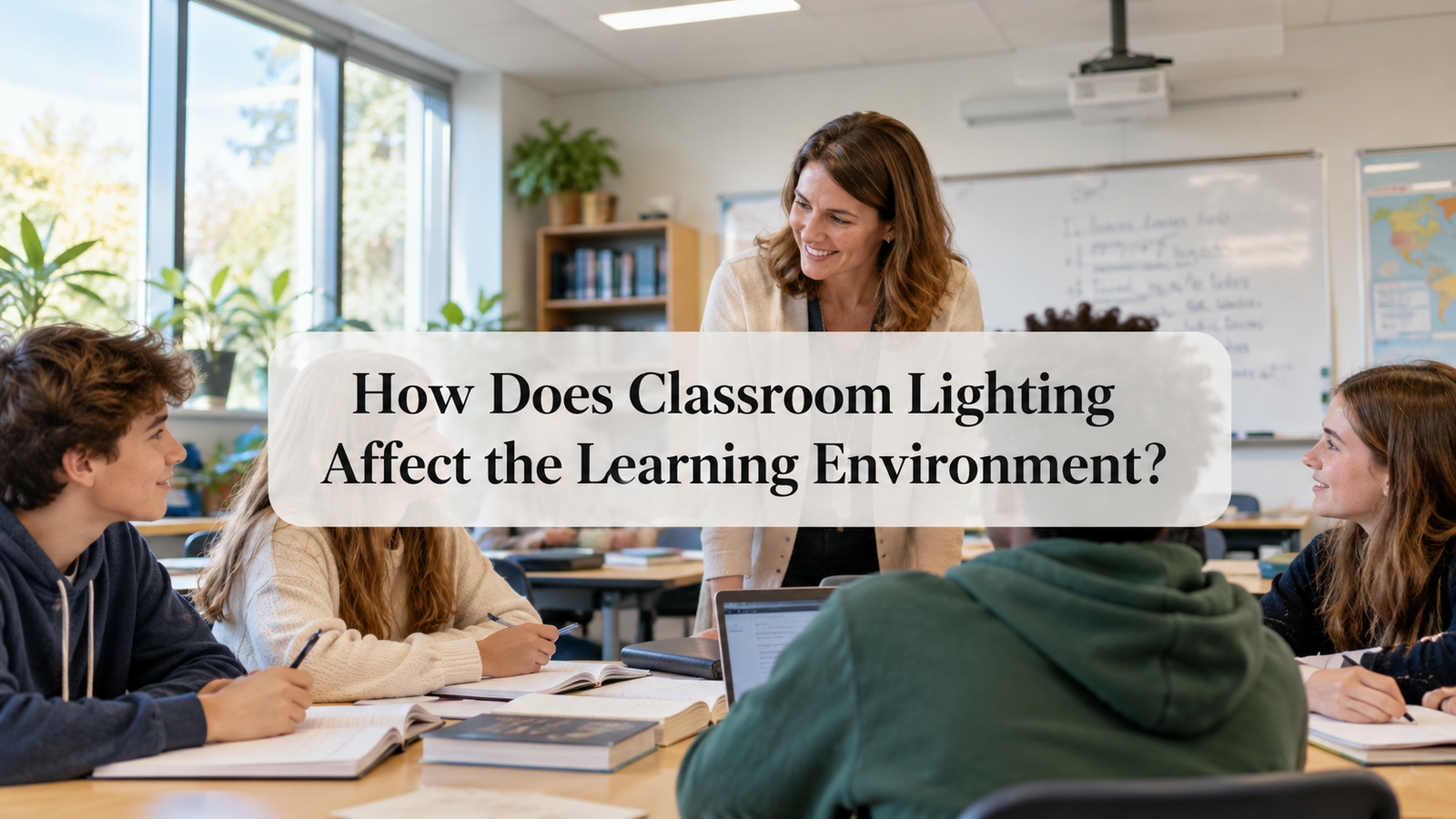
Classroom lighting plays an important role in creating a comfortable and productive learning environment. When students enter a classroom, they may not immediately notice the lights, windows, or brightness of the room. However, these factors can influence how comfortably they read, write, concentrate, and participate in lessons. Good classroom lighting helps students see learning materials clearly and allows teachers to conduct lessons without unnecessary visual discomfort.
The learning environment includes many elements, such as classroom furniture, temperature, noise levels, ventilation, and teaching methods. Lighting is another essential part of this environment because students spend several hours looking at books, notebooks, whiteboards, and digital screens. Poor lighting can make these activities more difficult, while properly planned lighting can support everyday classroom activities.
Understanding how classroom lighting affects the learning environment can help schools create spaces where students feel comfortable and ready to learn.
Why Is Classroom Lighting Important?
Classroom lighting is important because most educational activities depend on clear vision. Students need sufficient light to read textbooks, recognize words on a board, complete written assignments, and observe classroom demonstrations.
When lighting is too dim, students may struggle to see small text or detailed diagrams. When lighting is excessively bright, reflections and glare may create discomfort. Both situations can make classroom activities less pleasant.
Proper classroom lighting creates a balance between brightness and visual comfort. It allows students to focus on learning materials without constantly adjusting their position or struggling to see clearly.
Teachers also benefit from suitable lighting. They can read lesson plans, observe student activities, and move around the classroom more comfortably.
A well illuminated classroom supports the practical needs of both teaching and learning.
1. Classroom Lighting and Student Concentration
Student concentration is influenced by several environmental conditions. Lighting is one of the factors that can make it easier or harder for students to maintain attention during lessons.
In a poorly lit classroom, students may experience visual discomfort when reading or writing. They might need to move closer to their books or repeatedly adjust their posture to see the material.
These small difficulties can interrupt their attention.
Balanced lighting helps reduce unnecessary visual effort. When students can see their learning materials comfortably, they may find it easier to remain focused on classroom activities.
However, lighting alone cannot guarantee better concentration. Teaching quality, classroom noise, sleep, and student interest also influence attention.
Schools should therefore consider lighting as one part of a complete learning environment.
2. The Role of Natural Light in Classrooms
Natural light is sunlight that enters a classroom through windows, skylights, or other openings.
It can make classrooms feel brighter, more open, and more welcoming. Natural daylight also provides visual variety as outdoor conditions change throughout the day.
Students who spend many hours indoors may appreciate classrooms with access to daylight and outdoor views.
Natural light can also reduce the need for artificial lighting during suitable daytime conditions. This may help schools reduce electricity consumption.
However, direct sunlight is not always comfortable.
Strong sunlight entering through windows may create glare on desks, whiteboards, and computer screens. It can also increase classroom temperatures during hot weather.
Curtains, blinds, and appropriate window placement help control these problems.
The goal is not to allow the maximum amount of sunlight into every classroom. Instead, schools should provide useful daylight while controlling excessive brightness and heat.
3. How Poor Lighting Can Cause Eye Discomfort
Students regularly perform tasks that require close visual attention. Reading small printed words, writing notes, and looking at digital screens can place demands on their eyes.
Poor classroom lighting may increase visual discomfort during these activities.
For example, insufficient light can make printed text difficult to read. Strong reflections can make words on a screen less visible.
Some students may experience tired eyes, temporary blurred vision, or headaches when visual conditions are uncomfortable.
These symptoms can also have other causes, including uncorrected vision problems and prolonged screen use.
Proper classroom lighting should provide enough brightness for educational tasks without producing unnecessary glare.
Students should also be encouraged to take appropriate visual breaks during extended reading or screen activities.
If a student repeatedly experiences eye discomfort, a professional eye examination may be helpful.
4. The Effect of Classroom Lighting on Reading and Writing
Reading and writing are basic activities in almost every classroom.
Students need to recognize letters, understand printed information, and write clearly in notebooks.
Suitable lighting helps students distinguish text from the background of a page.
It also makes it easier to observe illustrations, mathematical symbols, and small details in educational materials.
Younger students may particularly benefit from clear visual conditions while learning handwriting and letter recognition.
During writing activities, shadows created by poorly positioned lights can make notebook pages difficult to see.
Teachers can reduce these problems by arranging desks where light is distributed evenly.
Classroom lighting should also allow students to see the whiteboard clearly from different seating positions.
When visual tasks become comfortable, students can direct more attention toward understanding the lesson.
5. Understanding the Importance of Artificial Lighting
Natural daylight is useful, but classrooms cannot depend on sunlight at all times.
Cloudy weather, early morning lessons, winter conditions, and rooms with limited windows may require artificial lighting.
Artificial lighting helps schools maintain suitable brightness when daylight is insufficient.
Modern classrooms commonly use LED lighting because it can provide efficient illumination and has a relatively long operating life.
LED systems are available in different brightness levels and color temperatures.
However, selecting an LED light does not automatically create a good learning environment.
The position, distribution, quality, and control of the lighting also matter.
Schools should choose lighting systems that provide sufficient illumination without creating harsh reflections or noticeable flickering.
A properly planned artificial lighting system supports classroom activities regardless of outdoor weather conditions.
6. How Lighting Brightness Affects Learning Comfort
Brightness is an important consideration in classroom design.
A classroom that is too dark may make reading and writing difficult. On the other hand, excessive brightness can make the environment uncomfortable.
Different classroom activities may require different lighting conditions.
For example, students completing written assignments need clear illumination across their desks.
During projector presentations, teachers may need to reduce lighting near the display while keeping enough light for students to move safely and take notes.
Science demonstrations and art activities may also require careful illumination.
Adjustable lighting systems allow teachers to respond to these changing needs.
The most suitable brightness depends on room dimensions, daylight availability, student activities, and applicable lighting standards.
Instead of focusing only on making classrooms brighter, schools should aim for comfortable and appropriate illumination.
7. The Relationship Between Lighting and Student Mood
The physical appearance of a classroom can influence how students experience the learning environment.
Lighting contributes to the atmosphere of the room.
A classroom with balanced illumination may feel more comfortable and inviting than one with dark corners or harsh overhead lights.
Natural daylight and outdoor views may also contribute to a pleasant indoor experience.
However, student mood depends on many factors, including social relationships, teaching methods, classroom temperature, and personal circumstances.
Lighting should not be treated as a direct solution to emotional or behavioral difficulties.
Instead, it can support an environment where students feel physically comfortable.
When schools combine suitable lighting with supportive teaching and respectful communication, they create more welcoming learning spaces.
8. How Classroom Lighting Supports Teacher Performance
Classroom lighting affects teachers as well as students.
Teachers regularly read books, prepare written materials, check assignments, and explain information using boards or digital displays.
Poor lighting can make these activities uncomfortable.
For example, reflections on a whiteboard may prevent students from seeing what a teacher has written. The teacher may need to change position or repeat explanations.
Similarly, insufficient lighting can make it difficult to review handwritten assignments.
Balanced lighting helps teachers conduct different activities more smoothly.
It also improves visibility when teachers monitor student work and provide individual assistance.
Teachers should have access to suitable lighting controls whenever possible.
This allows them to adjust classroom conditions according to the lesson instead of depending on one fixed lighting arrangement throughout the day.
9. The Importance of Lighting Color Temperature
Color temperature describes whether light appears warm, neutral, or cool.
It is commonly measured in Kelvin.
Warm lighting usually has a yellowish appearance, while cooler lighting appears more white or slightly bluish.
Different color temperatures can create different impressions within a room.
Some schools prefer neutral white lighting because it provides a clear appearance suitable for many classroom activities.
However, there is no single color temperature that guarantees better academic performance for every student.
Visual comfort, glare control, brightness, and overall lighting quality are often more important than selecting one particular light color.
Schools should avoid choosing lighting solely because it is advertised as improving memory or concentration.
Instead, they should consider how the lighting feels in the actual classroom and whether it supports the educational tasks being performed.
10. How Glare Affects the Classroom Learning Environment
Glare occurs when bright light causes discomfort or reduces the visibility of an object.
It is a common lighting problem in classrooms.
For example, sunlight may reflect from a whiteboard and make written information difficult to read.
Computer screens positioned directly opposite windows may also reflect outdoor brightness.
Students sitting near these reflections may struggle to see important information.
Glare can sometimes be reduced through simple classroom adjustments.
Teachers can reposition digital screens, adjust window blinds, and change the angle of certain displays.
Schools can also select lighting fixtures designed to distribute light more comfortably.
Careful classroom planning helps ensure that students sitting in different areas experience similar visual conditions.
Reducing glare is an important part of creating an effective classroom lighting system.
11. Classroom Lighting and Digital Learning
Digital technology has become a regular part of modern education.
Many classrooms use computers, projectors, interactive boards, and tablets to support teaching.
These devices introduce additional lighting considerations.
Strong overhead lighting may create reflections on computer screens. Direct sunlight can also reduce screen visibility.
On the other hand, using digital devices in a completely dark classroom may create an uncomfortable contrast between the bright screen and the surrounding environment.
A balanced lighting arrangement helps students view screens while remaining aware of their surroundings.
Teachers should adjust screen brightness according to classroom conditions.
They should also avoid placing screens where strong reflections interfere with visibility.
Digital learning works best when technology and classroom lighting are planned together.
12. The Connection Between Classroom Lighting and Energy Efficiency
Classroom lighting also affects school operating costs.
Lights may remain switched on for several hours every school day. Inefficient lighting systems can increase electricity consumption.
Energy efficient LED fixtures can help reduce lighting electricity use compared with many older technologies.
Schools can also benefit from making better use of available daylight.
For example, teachers may switch off unnecessary artificial lights when windows provide sufficient illumination.
Occupancy sensors and daylight controls can offer additional savings in suitable buildings.
However, electricity savings should never come at the expense of student visibility and safety.
Schools need to balance operating costs with educational comfort.
Regular maintenance is also important because dirty fixtures, damaged lamps, and poorly functioning controls can reduce lighting quality.
An efficient classroom lighting system should provide reliable illumination while avoiding unnecessary energy consumption.
13. How Classroom Design Influences Lighting Quality
Lighting effectiveness depends not only on the lights themselves but also on the design of the classroom.
Wall colors, ceiling finishes, furniture placement, and window locations influence how light spreads across the room.
Light colored surfaces generally reflect more light than dark surfaces.
This can help distribute illumination and reduce areas that appear unusually dark.
However, extremely glossy finishes may create unwanted reflections.
Matte wall finishes can often provide a more comfortable visual appearance.
Desk arrangement also matters.
If large furniture blocks windows, some seating areas may receive less daylight.
Similarly, placing the teaching board directly in front of a bright window may create visibility problems.
Schools should consider lighting during classroom planning rather than treating it as a final decoration.
Good classroom design combines furniture arrangement, daylight, artificial lighting, and surface finishes.
14. Practical Ways to Improve Classroom Lighting
Improving classroom lighting does not always require expensive construction or major renovations.
Schools can begin by observing how light behaves during ordinary lessons.
Teachers and school administrators can identify seating areas that appear too dark or receive excessive sunlight.
Cleaning windows and lighting fixtures may improve the amount of usable light.
Replacing damaged lamps can also help maintain consistent illumination.
Blinds and curtains allow teachers to manage strong sunlight during different parts of the day.
Schools can rearrange desks when students experience repeated glare or shadows.
Where budgets allow, adjustable LED systems and separate lighting controls can provide additional flexibility.
It is also useful to ask students whether they have difficulty seeing the board or reading classroom materials.
Their feedback may reveal problems that are not immediately obvious to adults.
For major lighting improvements, schools should consult qualified professionals and follow applicable building and educational lighting standards.
15. Why Regular Lighting Maintenance Matters
Even a well designed classroom lighting system requires maintenance.
Over time, light fixtures may collect dust, lamps may lose brightness, and electrical components may develop faults.
These problems can reduce lighting quality.
A classroom with several damaged lights may have uneven brightness across different seating areas.
Students sitting in darker sections may experience more difficulty reading or writing.
Schools should therefore include lighting inspections in their regular maintenance routines.
Faulty lamps should be replaced, and damaged electrical equipment should be repaired by qualified personnel.
Maintenance teams should also check whether lighting controls and window blinds operate correctly.
Regular attention helps preserve the benefits of the original classroom lighting design.
Frequently Asked Questions About Classroom Lighting
What type of lighting is best for classrooms?
The best classroom lighting provides comfortable, even illumination with minimal glare. A combination of controlled natural daylight and good quality artificial lighting works well in many educational spaces.
Does natural light improve student learning?
Natural light can improve visual comfort and the classroom atmosphere when it is properly controlled. Some research suggests associations between daylight conditions and educational outcomes, but academic performance depends on many additional factors.
Can poor classroom lighting affect concentration?
Yes. Poor lighting can make reading and other visual activities uncomfortable, which may distract students. However, concentration is also influenced by sleep, teaching methods, noise, and personal factors.
Are LED lights suitable for classrooms?
LED lights are commonly suitable for classrooms because they are energy efficient and available in different brightness levels. Schools should choose good quality fixtures with appropriate glare control and light distribution.
How can teachers improve lighting without spending much money?
Teachers can clean windows, use blinds to reduce glare, adjust desk positions, report damaged lights, and make better use of available daylight.
Conclusion
Classroom lighting is an important part of a comfortable and supportive learning environment. It influences how easily students can read, write, observe classroom materials, and use digital devices.
Good lighting also supports teachers by improving visibility and making classroom activities easier to manage.
Natural daylight, suitable artificial lighting, balanced brightness, and effective glare control all contribute to better visual conditions.
Schools do not always need expensive improvements to make a meaningful difference. Simple actions such as maintaining lights, adjusting furniture, controlling sunlight, and listening to student feedback can help create more comfortable classrooms.