
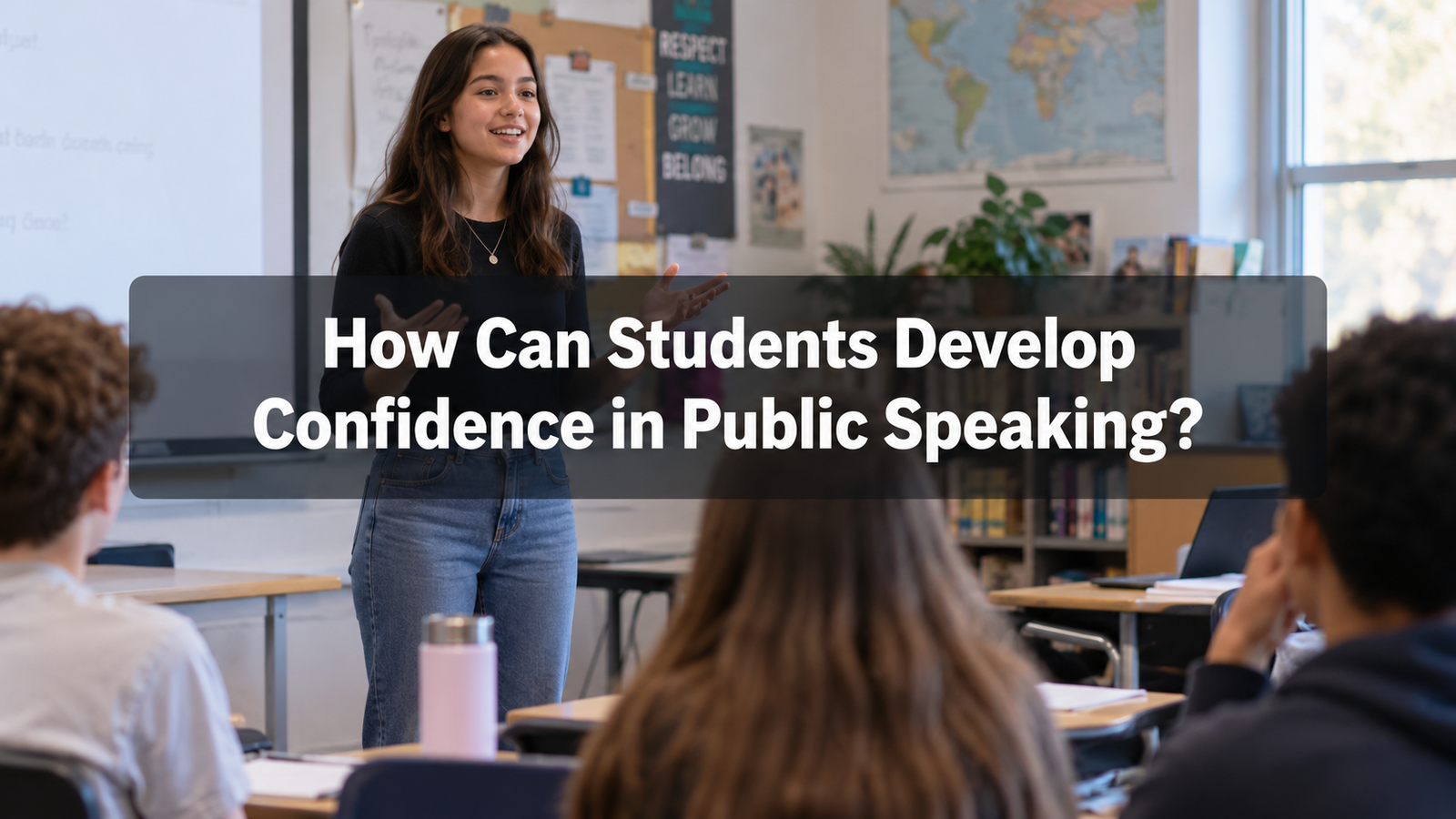
Public speaking is an important skill that helps students communicate their thoughts, share knowledge, and express ideas in front of others. Whether students are delivering classroom presentations, participating in debates, or speaking during school events, confidence plays an essential role in their performance. However, many students feel nervous when they are asked to speak in front of an audience.
Developing confidence in public speaking is not something that happens overnight. It requires regular practice, preparation, patience, and a positive attitude. Some students naturally feel comfortable speaking in front of others, while others need more time to overcome their fears. The encouraging thing is that public speaking confidence is a skill that almost anyone can improve.
By understanding the causes of nervousness and following practical speaking techniques, students can gradually become more confident communicators. Learning how to speak clearly and confidently can also benefit students in their academic studies, professional careers, and everyday conversations.
Why Is Confidence Important in Public Speaking?
Confidence allows students to communicate their messages clearly and effectively. When students feel confident, they can concentrate on explaining their ideas instead of worrying about what others might think.
A confident speaker is more likely to maintain eye contact, use appropriate gestures, and speak in a clear voice. These qualities help the audience understand the message and remain interested in the presentation.
Confidence also supports academic development. Students who feel comfortable speaking in class are often more willing to ask questions, share opinions, and participate in group discussions.
Public speaking confidence can also prepare students for future opportunities, including university interviews, professional meetings, and leadership responsibilities.
Confidence does not mean that students never experience nervousness. Instead, it means learning how to manage nervous feelings while communicating effectively.
Understand the Reasons Behind Public Speaking Fear
Before students can develop confidence in public speaking, they should understand why speaking in front of others sometimes feels difficult.
One common reason is the fear of making mistakes. Students may worry about forgetting important information, pronouncing words incorrectly, or giving the wrong answer.
Another reason is the fear of being judged. Some students become uncomfortable because they believe their classmates will laugh at them or criticize their performance.
A lack of preparation can also increase nervousness. When students do not fully understand their topic, they may struggle to explain their ideas confidently.
Negative experiences can influence speaking confidence as well. A student who previously felt embarrassed during a presentation may become anxious about speaking again.
Recognizing these concerns is the first step toward managing them. Students should remember that making occasional mistakes is a normal part of learning.
Start With Small Speaking Opportunities
One of the most effective ways to develop public speaking confidence is to begin with small and manageable activities.
Students do not need to start by delivering a long speech in front of hundreds of people. They can begin by speaking in front of a mirror, explaining a lesson to a family member, or discussing a topic with a close friend.
Once these activities become comfortable, students can gradually increase the size of their audience.
For example, a student might first explain a topic to one friend, then speak in front of three classmates, and eventually deliver a short presentation to the entire class.
This gradual approach helps students become familiar with speaking situations without feeling overwhelmed.
Each successful experience builds confidence and makes the next speaking opportunity feel more manageable.
Prepare Your Speech Carefully
Preparation is one of the strongest foundations of confident public speaking.
Students who understand their topics thoroughly usually feel more comfortable explaining information to an audience.
Before preparing a speech, students should research the subject using reliable educational resources, textbooks, and other appropriate learning materials.
After gathering information, they should identify the most important points they want to communicate.
A well organized speech generally includes three main sections.
Introduction
The introduction should capture the audience’s attention and clearly explain the topic.
Students can begin with an interesting question, a simple example, or a relevant fact.
Main Content
The main section should explain the important ideas in a logical order.
Students should use clear explanations and practical examples to make the information easier to understand.
Conclusion
The conclusion should summarize the central message and leave the audience with a meaningful final thought.
A clear structure helps students remember their ideas and reduces the possibility of becoming confused during their presentations.
Practice Speaking Regularly
Regular practice is essential for students who want to improve their public speaking skills.
Reading a speech silently is useful, but speaking the words aloud provides a different learning experience.
Students should practice delivering their speeches using the same voice, pace, and expressions they plan to use during the actual presentation.
Practicing in front of a mirror can help students observe their facial expressions, posture, and gestures.
Recording a speech on a smartphone is another useful technique. Students can listen to their recordings and identify areas that need improvement.
They may notice that they speak too quickly, repeat certain words, or pause unnecessarily.
Instead of becoming discouraged by these observations, students should treat them as opportunities to improve.
Practicing for a few minutes every day can gradually strengthen speaking skills and make public speaking feel more natural.
Improve Voice Clarity and Speaking Speed
A clear voice is an important part of successful public speaking.
Students sometimes speak too quickly when they feel nervous. This can make their words difficult to understand and may cause them to lose track of their thoughts.
Speaking slowly and clearly gives both the speaker and the audience enough time to understand the message.
Students should practice pronouncing words carefully and using a comfortable speaking volume.
They should also learn to pause naturally between important ideas.
Pauses are useful because they allow the audience to process information and give the speaker time to organize the next thought.
Reading a paragraph aloud from a textbook can be a simple daily exercise for improving pronunciation, clarity, and speaking rhythm.
Over time, students can develop greater control over their voices and communicate more confidently.
Use Positive Body Language
Body language can influence how an audience responds to a speaker.
Students who stand comfortably, maintain an upright posture, and use natural hand movements often appear more confident.
Eye contact is particularly important because it creates a connection between the speaker and the audience.
Instead of looking continuously at the floor or reading from notes, students can briefly look at different people around the room.
However, eye contact should feel natural rather than forced.
Hand gestures can also support explanations, especially when describing important points or comparing different ideas.
Students should avoid unnecessary movements that might distract the audience.
The goal is not to copy the behavior of professional speakers. It is to develop a comfortable speaking style that supports clear communication.
Learn to Manage Nervousness
Feeling nervous before a presentation is common, even among experienced speakers.
Students may notice a faster heartbeat, shaky hands, or difficulty concentrating. These reactions can occur when the body responds to a stressful situation.
Learning simple relaxation techniques can help students manage these feelings.
Taking a few slow breaths before speaking may reduce tension and improve concentration.
Students should also avoid rushing to begin their speeches. Standing comfortably and taking a short pause can help them feel more prepared.
Another helpful strategy is to concentrate on the message rather than the fear of making mistakes.
When students focus on helping their audience understand something useful, they may spend less time worrying about themselves.
With repeated experience, nervousness often becomes easier to manage.
Develop Confidence Through Classroom Participation
Classroom participation provides valuable opportunities to practice communication skills.
Students who regularly ask questions, answer teachers, and contribute to discussions can become more comfortable expressing their ideas.
They do not need to give perfect answers every time.
Even a short contribution can help students gain experience speaking in front of others.
Teachers can support this process by creating respectful classroom environments where students feel safe sharing their thoughts.
Group discussions are especially helpful because they allow students to practice speaking with a smaller audience.
As their confidence grows, students may become more willing to participate in larger discussions and formal presentations.
Active classroom participation can therefore serve as an important foundation for public speaking confidence.
Learn From Effective Public Speakers
Observing experienced speakers can help students understand what makes a presentation effective.
Students can watch educational lectures, classroom presentations, interviews, and public speeches.
While watching, they should pay attention to how speakers introduce topics, explain information, and maintain audience interest.
They can also observe voice control, facial expressions, pauses, and body language.
However, students should not attempt to copy every detail of another person’s speaking style.
Different speakers have different personalities and communication strengths.
The purpose of observation is to learn useful techniques and adapt them to personal abilities.
Reading books about communication and presentation skills can also provide valuable guidance.
Combining observation with practice helps students develop their own confident speaking style.
Focus on the Message Instead of Perfection
One common mistake students make is expecting every presentation to be perfect.
They may believe that forgetting one sentence or making a small pronunciation error means the entire speech has failed.
In reality, effective public speaking is primarily about communicating useful information.
Most audiences are more interested in understanding the message than noticing every small mistake.
Students should therefore focus on explaining their ideas clearly rather than memorizing every sentence exactly.
Understanding the topic makes it easier to continue speaking even when the original wording is forgotten.
If a student makes a mistake, taking a brief pause and continuing calmly is usually better than becoming embarrassed.
Accepting that mistakes are part of the learning process can significantly improve public speaking confidence.
Ask for Constructive Feedback
Feedback helps students understand their strengths and identify areas for improvement.
After delivering a presentation, students can ask teachers, classmates, or family members for their opinions.
Useful feedback should focus on specific aspects of the speech, including voice clarity, organization, body language, and audience engagement.
For example, a teacher might suggest speaking more slowly or providing additional examples.
Students should listen carefully without interpreting every suggestion as personal criticism.
Positive feedback is equally important because it helps students recognize their progress.
Keeping a small record of improvements can be motivating.
When students notice that their presentations are becoming clearer and more organized, their confidence often increases.
Build Strong Knowledge About Your Topic
Knowledge and confidence are closely connected.
Students who understand a topic deeply are generally better prepared to explain it and respond to questions.
Instead of memorizing information without understanding it, students should spend time exploring the meaning behind important concepts.
Reading textbooks, reviewing examples, and discussing ideas with others can strengthen understanding.
Students can also prepare for possible audience questions.
For example, if a student is presenting information about environmental pollution, understanding its causes, effects, and possible solutions will make the presentation more complete.
Strong subject knowledge allows students to speak more naturally because they are explaining familiar ideas rather than simply repeating memorized sentences.
Practice With Friends and Family
Friends and family members can provide a comfortable environment for public speaking practice.
Students can choose a simple topic and deliver a short presentation at home.
Afterward, listeners can share suggestions about speaking speed, clarity, and presentation structure.
This type of practice helps students become familiar with having people listen to them.
It also provides an opportunity to answer questions and explain ideas spontaneously.
Students can gradually make these activities more challenging by increasing speaking time or inviting additional listeners.
Supportive practice sessions can make formal classroom presentations feel less intimidating.
Set Realistic Public Speaking Goals
Developing confidence becomes easier when students have clear and achievable goals.
Instead of expecting immediate improvement, students should concentrate on gradual progress.
A beginner might aim to speak for one minute without reading from notes.
After achieving that goal, the student could prepare a three minute presentation with a clear introduction and conclusion.
Another goal might involve maintaining eye contact or reducing unnecessary pauses.
Goals should match the student’s current ability and provide a reasonable challenge.
Recognizing small achievements encourages continued effort.
Over time, these improvements can develop into stronger communication skills and greater confidence.
How Can Teachers Help Students Become Confident Speakers?
Teachers play an important role in helping students overcome public speaking difficulties.
A supportive classroom environment encourages participation and reduces the fear of embarrassment.
Teachers can introduce simple speaking activities before assigning formal presentations.
Storytelling, group discussions, reading aloud, and short explanations are useful opportunities for practice.
Students should also receive enough preparation time and clear instructions about presentation expectations.
Constructive feedback should highlight strengths while identifying practical areas for improvement.
Teachers can encourage respectful listening so that students feel comfortable expressing their thoughts.
When speaking opportunities are regular and supportive, students can develop confidence at their own pace.
How Does Public Speaking Confidence Help Students in the Future?
Public speaking skills are valuable beyond school examinations and classroom assignments.
Students who communicate confidently may find it easier to participate in university seminars, interviews, and professional discussions.
These abilities are also useful for teamwork, leadership, and problem solving.
In everyday life, confident communication helps individuals explain opinions, ask meaningful questions, and share information effectively.
Public speaking can also strengthen critical thinking because students must organize ideas and communicate them logically.
By improving these skills during their school years, students can prepare themselves for future academic and professional responsibilities.
Conclusion
Developing confidence in public speaking is a gradual process that requires preparation, practice, patience, and experience. Students can begin with simple speaking activities and slowly progress toward more challenging presentations.
Understanding the topic, organizing ideas, controlling speaking speed, and using positive body language can make communication more effective. Learning to manage nervousness and accepting occasional mistakes are equally important.
Teachers, friends, and family members can support this development by providing encouragement and constructive feedback.
Most importantly, students should remember that confident public speakers are not necessarily people who never feel afraid. They are individuals who have learned to communicate despite their nervousness.
With consistent practice and a willingness to improve, students can develop the confidence needed to express their ideas clearly in classrooms, academic events, and everyday situations.