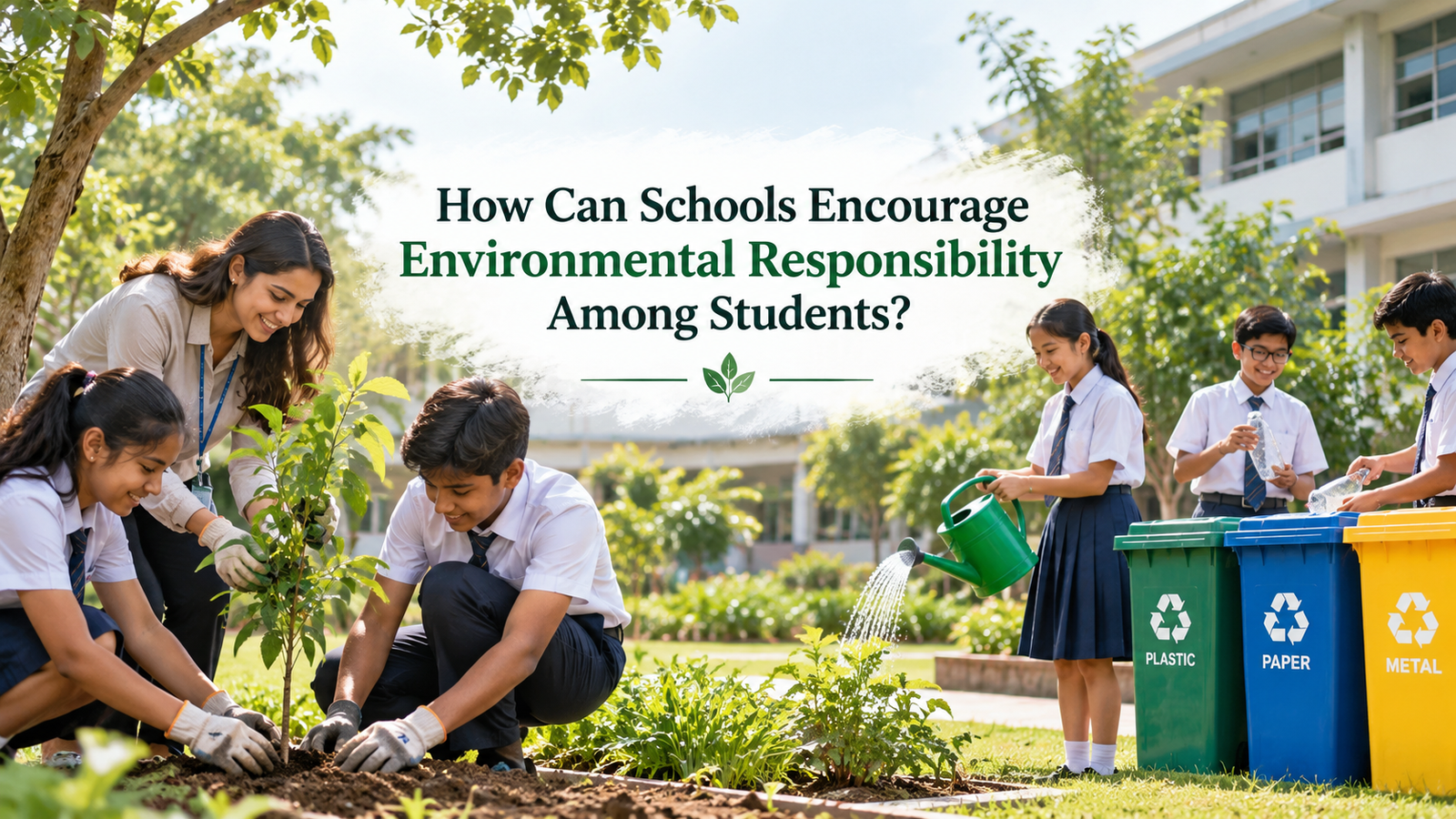
Environmental responsibility is becoming an important part of modern education. As the world faces problems such as pollution, climate change, water shortages, and increasing waste, schools have an opportunity to teach students how their everyday actions affect the environment. Students who develop environmentally responsible habits during their school years are more likely to carry those habits into adulthood.
Schools are not only places where students learn academic subjects. They also help young people develop values, attitudes, and practical life skills. By introducing environmental education and encouraging sustainable practices, schools can help students understand the importance of protecting natural resources.
Environmental responsibility among students does not develop through textbooks alone. It requires practical activities, positive examples, and regular participation. Simple actions such as saving electricity, reducing plastic waste, planting trees, and keeping classrooms clean can make environmental awareness a natural part of school life.
This article explains how schools can encourage environmental responsibility among students through education, practical activities, and community participation.
What Is Environmental Responsibility in Schools?
Environmental responsibility means understanding how human activities affect nature and making thoughtful decisions to reduce environmental harm.
In schools, environmental responsibility involves teaching students to respect natural resources, prevent unnecessary waste, and participate in activities that protect their surroundings.
For example, students demonstrate environmental responsibility when they switch off unnecessary lights, avoid wasting drinking water, reuse school supplies, and dispose of rubbish properly.
The main goal is not to make students responsible for solving every environmental problem. Instead, schools should help them understand that small individual actions and larger community efforts both contribute to environmental protection.
When students understand the reasons behind environmentally friendly behavior, they are more likely to practice it willingly.
1. Include Environmental Education in the School Curriculum
One of the most effective ways to encourage environmental responsibility among students is to include environmental topics in regular classroom lessons.
Environmental education does not need to be limited to science classes. Teachers can connect environmental issues with different academic subjects.
In science lessons, students can learn about ecosystems, pollution, renewable energy, and natural resources.
Geography lessons can explain climate patterns, deforestation, and the relationship between human activities and the environment.
Mathematics teachers can use examples involving electricity consumption, water usage, and waste quantities to develop practical problem solving skills.
Language teachers can encourage students to write essays about environmental protection or prepare speeches about reducing pollution.
When environmental education becomes part of different subjects, students begin to understand that protecting nature is connected to many aspects of everyday life.
Schools should also use examples from local communities to make lessons easier to understand.
2. Encourage Students to Practice Waste Reduction
Waste management is an important part of environmental responsibility in schools.
Students use paper, food packaging, plastic bottles, and various classroom materials every day. Without proper guidance, these materials may become unnecessary waste.
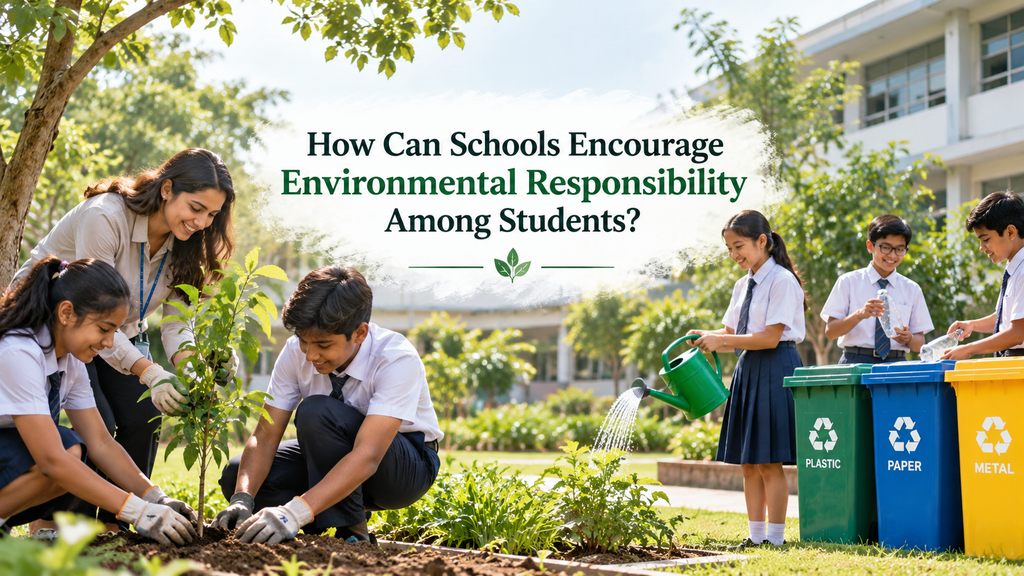
Schools can encourage students to reduce waste by using reusable water bottles, lunch containers, and school supplies.
Teachers can explain the importance of using both sides of paper before throwing it away.
Classrooms can also have clearly labeled bins for different waste materials where suitable recycling services are available.
Students should learn that reducing waste is often more effective than simply disposing of materials after use.
For example, carrying a reusable lunchbox can reduce the need for disposable packaging.
Schools can organize activities where students observe the types of waste produced during a normal school day.
This practical experience helps students recognize opportunities to improve their habits.
3. Organize School Gardening and Tree Planting Activities
School gardening provides students with an opportunity to develop a direct connection with nature.
When students participate in planting flowers, vegetables, and trees, they learn how plants grow and why healthy ecosystems matter.
A small school garden can also become a practical learning space.
Students can observe soil conditions, understand plant nutrition, and learn about the importance of sunlight and water.
Teachers may assign gardening responsibilities to different classes so that students participate regularly.
For example, one group can prepare the soil while another group waters plants and observes their growth.
Schools should select plants suitable for local weather conditions and available water resources.
Native plants can be particularly useful because they are often better adapted to local environmental conditions.
Tree planting activities should also include proper maintenance because young trees need care after planting.
Through these activities, students develop patience, teamwork, and a sense of responsibility toward living things.
4. Teach Students the Importance of Water Conservation
Water conservation is an essential environmental habit that schools can promote through everyday activities.
Students should understand that clean freshwater is a valuable resource and should not be wasted.
Teachers can explain how water is used in agriculture, homes, industries, and natural ecosystems.
Schools can encourage students to close taps properly after washing their hands.
Leaking taps and damaged water pipes should be repaired promptly to prevent unnecessary water loss.
Posters near drinking water areas and washrooms can remind students to use water carefully.
Practical classroom activities can also help students understand water conservation.
For example, students can measure how much water is wasted when a tap continues dripping.
Such activities make environmental lessons more meaningful because students can observe the problem directly.
Water conservation becomes easier when the school itself demonstrates responsible water management.
5. Promote Energy Saving Habits in Classrooms
Energy conservation is another practical way schools can encourage environmental responsibility among students.
Classrooms often use lights, fans, computers, projectors, and other electrical equipment.
Students should learn why unnecessary electricity consumption increases energy demand and can contribute to environmental pollution, depending on how electricity is generated.
Teachers can encourage students to switch off lights and fans when they are not required.
Computers and other electronic devices should also be turned off appropriately after use.
Schools can make better use of natural daylight and ventilation where classroom conditions allow.
An energy awareness activity can involve students observing electricity usage throughout the school.
They can identify situations where electricity is being wasted and suggest improvements.
These activities encourage students to think critically about resource consumption.
Importantly, energy saving practices should never compromise proper lighting, ventilation, or student comfort.
6. Establish Environmental Clubs in Schools
Environmental clubs can provide students with opportunities to participate actively in sustainability projects.
A school environmental club may include students from different classes who share an interest in protecting nature.
Club members can organize awareness campaigns, gardening activities, waste reduction projects, and school cleanliness programs.
Teachers can guide these activities while allowing students to contribute their own ideas.
For example, students might develop a campaign encouraging classmates to bring reusable water bottles.
They could also prepare posters explaining the environmental effects of plastic pollution.
Environmental clubs help students develop leadership, communication, and teamwork skills.
Students also learn how to plan activities, solve problems, and evaluate results.
Schools should make environmental clubs welcoming so that students with different interests and abilities can participate.
7. Organize Environmental Awareness Campaigns
Awareness campaigns can help environmental responsibility become an important part of school culture.
Schools can organize special programs on occasions such as World Environment Day and Earth Day.
Students may participate in poster competitions, speeches, debates, quizzes, and educational exhibitions.
These activities allow students to express their understanding of environmental issues creatively.
For example, a poster competition about plastic pollution can encourage students to investigate how plastic waste affects rivers, oceans, and wildlife.
Schools can also invite environmental educators or local experts to discuss environmental challenges.
However, awareness campaigns should not be limited to annual celebrations.
Regular classroom discussions and practical activities are necessary to maintain interest throughout the academic year.
The purpose of these campaigns should be to encourage informed action rather than create fear about environmental problems.
8. Encourage Clean and Green School Environments
A clean school environment can influence how students think about environmental responsibility.
When classrooms, playgrounds, corridors, and gardens are maintained properly, students learn to value cleanliness and shared spaces.
Schools should provide accessible rubbish bins and encourage students to dispose of waste responsibly.
Teachers can explain why littering harms the environment and creates unhealthy surroundings.
Students can participate in supervised cleanliness activities that are safe and appropriate for their age.
These activities should focus on developing responsibility rather than replacing professional cleaning services.
Schools can also improve outdoor spaces by maintaining plants, creating shaded areas, and protecting existing trees.
A pleasant school environment makes environmental responsibility more visible in everyday life.
Students are more likely to respect their surroundings when the school community consistently demonstrates the same values.
9. Connect Environmental Learning With Real Life
Environmental education becomes more effective when students can connect classroom knowledge with their daily experiences.
Teachers can discuss environmental issues that students observe in their neighborhoods.
These might include plastic litter, traffic pollution, water shortages, or the loss of green spaces.
Students can investigate these problems through age appropriate projects.
For example, a class might observe how much disposable packaging is used during school lunch breaks.
Students could then discuss practical ways to reduce unnecessary packaging.
Teachers can also encourage students to examine environmental choices at home, such as conserving water and reducing food waste.
These projects help students understand that environmental responsibility extends beyond school boundaries.
Real life learning also develops observation, research, and decision making skills.
10. Involve Parents and Local Communities
Schools can strengthen environmental education by involving parents and community members.
Students are more likely to maintain positive habits when similar practices are encouraged at home.
Schools can share simple environmental tips with parents through newsletters, meetings, or school communication platforms.
Families may be encouraged to reduce food waste, conserve water, and use reusable shopping bags.
Community participation can also support environmental projects.
For example, schools may collaborate with local organizations to arrange tree planting programs or educational workshops.
Parents with knowledge of agriculture, gardening, waste management, or environmental science may contribute to classroom discussions.
These partnerships help students recognize that environmental protection requires cooperation.
They also strengthen the relationship between schools and their surrounding communities.
11. Encourage Responsible Use of School Supplies
School supplies provide another opportunity to teach environmentally responsible habits.
Students regularly use notebooks, pencils, textbooks, art materials, and other educational resources.
Schools can encourage students to take care of these materials and avoid unnecessary replacement.
Textbooks that remain in good condition may be reused by younger students where school policies allow.
Students can also learn how to organize their stationery to prevent loss and waste.
Teachers may encourage creative projects using suitable leftover paper, cardboard, and other safe materials.
However, schools should explain that reusing materials is only one part of environmental responsibility.
Choosing durable products and avoiding unnecessary purchases can also reduce resource consumption.
These habits help students understand the importance of thoughtful consumption.
12. Make Teachers Positive Environmental Role Models
Teachers have an important influence on student behavior.
Students often observe how teachers use resources, maintain classrooms, and respond to environmental concerns.
When teachers practice responsible habits, environmental education becomes more convincing.
For example, teachers can avoid unnecessary printing, use classroom materials carefully, and encourage proper waste disposal.
They can also discuss environmental decisions openly with students.
If a teacher chooses to reuse teaching materials, explaining the reason can turn a simple action into a learning opportunity.
School administrators should demonstrate similar commitment.
Environmental responsibility should become part of the institution’s everyday practices rather than an occasional classroom topic.
Consistent examples from adults can encourage students to develop lasting habits.
13. Use Practical Environmental Projects
Practical projects allow students to apply environmental knowledge and develop problem solving abilities.
Schools can design projects according to student age, available resources, and local environmental conditions.
Younger students may create posters about saving water or observe plants growing in the school garden.
Older students can conduct simple waste audits, investigate energy consumption, or research local environmental concerns.
For example, students might compare the amount of classroom paper waste produced during two different weeks.
After introducing paper saving practices, they can observe whether waste decreases.
This type of project teaches students how to collect information, evaluate results, and improve their methods.
Practical environmental projects also encourage creativity and independent thinking.
Most importantly, students learn that responsible environmental action involves understanding problems and choosing realistic solutions.
14. Recognize and Encourage Positive Environmental Behavior
Positive encouragement can motivate students to participate in environmental activities.
Schools may recognize classes that demonstrate consistent waste reduction, responsible water use, or successful gardening efforts.
Recognition can take the form of certificates, classroom appreciation, or opportunities to present projects during school assemblies.
However, environmental responsibility should not become a competition focused only on rewards.
Students need to understand the purpose behind their actions.
Teachers should appreciate effort, improvement, cooperation, and thoughtful decision making.
A student who reminds classmates to avoid wasting paper is demonstrating responsibility even without receiving an award.
Recognition works best when it encourages continued participation and helps students feel that their contributions matter.
15. Build Environmental Responsibility Into School Policies
Long term environmental responsibility requires support from school management.
Schools can introduce practical policies that encourage responsible resource use and reduce unnecessary waste.
These policies may include maintaining water facilities, reducing avoidable printing, improving waste collection, and choosing durable school equipment.
School administrators can review electricity and water consumption to identify possible improvements.
Student representatives may also be invited to contribute suggestions.
For example, an environmental committee could discuss how to improve waste disposal facilities or maintain school gardens.
Policies should be realistic and consider the school’s financial resources and available infrastructure.
When school policies support classroom lessons, students see that environmental responsibility is a shared institutional commitment.
What Are the Benefits of Environmental Responsibility Among Students?
Environmental education offers benefits beyond protecting natural resources.
It helps students develop awareness of how their actions affect other people and the natural world.
Students who participate in environmental projects can improve their teamwork, communication, and leadership abilities.
Gardening, waste reduction, and conservation activities also provide opportunities to practice planning and problem solving.
Environmental responsibility encourages students to think carefully before using resources.
It can also strengthen their connection with their communities by encouraging participation in meaningful activities.
Another important benefit is the development of habits that may continue into adult life.
Students who understand environmental issues are better prepared to make informed decisions about consumption, transportation, energy, and waste management.
These skills contribute to responsible citizenship and lifelong learning.
Common Challenges Schools May Face
Schools may experience difficulties when introducing environmental programs.
Limited budgets, lack of outdoor space, insufficient teaching materials, and busy academic schedules can affect participation.
Some students may initially show little interest in environmental activities.
Schools can respond by starting with simple, affordable practices.
Activities such as switching off unnecessary lights, conserving water, and reducing paper waste generally require little additional spending.
Teachers can also connect environmental topics with existing lessons instead of creating entirely separate subjects.
Student participation should be encouraged through interesting activities and practical examples.
Schools should avoid introducing too many programs at once.
Starting with a few achievable goals and reviewing progress regularly can help create sustainable improvements.
Conclusion
Encouraging environmental responsibility among students is an important part of preparing young people for the future.
Schools can make a meaningful contribution by combining environmental education with practical activities and responsible daily practices.
Waste reduction, water conservation, energy saving, gardening, environmental clubs, and community involvement can all help students understand the importance of protecting natural resources.
Teachers and school administrators also play essential roles by demonstrating environmentally responsible behavior.
The most effective approach is to make environmental responsibility a regular part of school life rather than treating it as a special activity.
When students receive knowledge, encouragement, and opportunities to participate, they can gradually develop habits that benefit both their communities and the environment.