
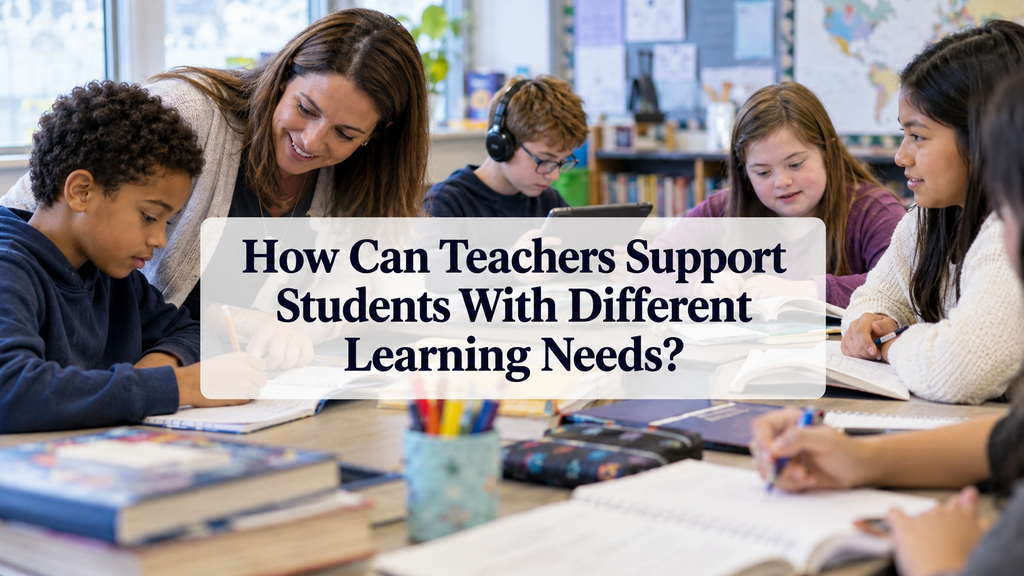
Every classroom is filled with students who have different abilities, interests, backgrounds, and learning experiences. Some students understand new concepts quickly, while others need additional explanations and practice. Some enjoy reading and writing, while others learn more effectively through discussions, demonstrations, or practical activities. These differences are a natural part of education.
Teachers play an important role in creating an environment where every student has a fair opportunity to learn and succeed. Understanding how teachers can support students with different learning needs is essential for improving classroom participation, academic performance, and student confidence.
Supporting different learning needs does not mean preparing a completely separate lesson for every student. Instead, it involves using flexible teaching methods, understanding individual challenges, and providing appropriate learning opportunities.
When teachers recognize that students learn at different speeds and require different levels of support, they can create a classroom where everyone feels included and motivated.
Understanding Different Learning Needs in the Classroom
Different learning needs refer to the individual requirements students have when understanding, processing, remembering, and applying information.
These needs may develop because of differences in prior knowledge, language proficiency, attention, physical abilities, emotional development, or learning difficulties.
For example, a student who struggles with reading may understand a science lesson better when the teacher explains it verbally and uses pictures. Another student may understand the same lesson through reading independently.
Some students may need additional challenges because they already understand the basic material.
It is important for teachers to avoid assuming that every student should learn in exactly the same way or at the same speed.
A supportive classroom recognizes these differences without making students feel separated from their classmates.
Identify Individual Learning Strengths and Challenges
The first step in supporting students with different learning needs is understanding their strengths and challenges.
Teachers can observe how students respond to lessons, complete assignments, participate in discussions, and solve problems.
Regular classroom observations often reveal important information about individual learning needs.
For example, a student who rarely answers questions during class may perform well in written assignments. Another student may confidently explain ideas but struggle to organize them in writing.
Teachers can also use short assessments, informal conversations, and classroom activities to understand student progress.
These observations help teachers identify where additional support may be necessary.
Rather than focusing only on weaknesses, teachers should also recognize students’ existing abilities.
When students are encouraged to use their strengths, they often become more confident about improving difficult skills.
Use Different Teaching Methods
One of the most effective ways teachers can support different learning needs is by using a variety of teaching methods.
A lesson that depends entirely on reading from a textbook may not give every student the same opportunity to understand the subject.
Teachers can combine explanations, visual materials, classroom discussions, demonstrations, and practical exercises.
For example, when teaching the water cycle, a teacher might explain the process verbally, display a diagram, and ask students to describe what happens when water evaporates.
Students can then complete a simple activity to demonstrate their understanding.
This approach provides several ways to access the same information.
Although students may have preferences, research does not establish that matching instruction to fixed learning style categories improves results. Providing multiple meaningful ways to learn is generally more useful.
Teachers should select methods according to the lesson objectives and the difficulties students experience.
Create a Positive and Inclusive Classroom Environment
Students learn more comfortably when they feel respected, safe, and accepted.
An inclusive classroom is one where students with different learning needs can participate without fear of embarrassment.
Teachers can establish clear expectations for respectful behavior and encourage students to appreciate individual differences.
For example, students should understand that asking questions, making mistakes, and requesting clarification are normal parts of learning.
Teachers can also avoid comparing students publicly or labeling them according to academic ability.
A student who needs additional time to complete an activity should not feel less capable than classmates who finish earlier.
Positive communication helps build trust between teachers and students.
When students believe their teacher understands their difficulties, they are more likely to participate and seek help.
Apply Differentiated Instruction
Differentiated instruction is a teaching approach that adjusts learning activities and support according to student needs.
The main objective is to help students work toward shared learning goals while allowing flexibility in how they reach those goals.
For example, during a reading lesson, some students may work with shorter passages and vocabulary explanations. Others may read more complex texts and answer analytical questions.
Both groups can focus on the same essential reading skills.
Teachers can also adjust the amount of guidance provided during an activity.
A student who needs additional help may receive step by step instructions, while another student works more independently.
Differentiated instruction requires careful planning, but it can make classroom learning more accessible and meaningful.
Provide Clear and Simple Instructions
Students may struggle with assignments when instructions are too complicated or unclear.
Teachers can reduce confusion by explaining tasks in simple language and dividing larger activities into manageable steps.
For example, instead of asking students to complete an entire research project without guidance, teachers can explain the process in stages.
Students might begin by selecting a topic, collecting information, preparing an outline, and writing a final report.
Writing important instructions on the classroom board can also help students remember what they need to do.
Teachers should check understanding before students begin working.
Asking students to explain the task in their own words can reveal misunderstandings that might otherwise remain unnoticed.
Clear instructions benefit the entire classroom, especially students who need additional support with attention, language, or organization.
Encourage Active Student Participation
Active participation helps teachers understand whether students are following the lesson.
However, not every student feels comfortable speaking in front of the entire class.
Some students need additional thinking time, while others prefer discussing ideas with a partner before sharing them publicly.
Teachers can create different opportunities for participation.
Small group discussions, partner activities, written responses, and practical demonstrations allow students to contribute in different ways.
For example, a teacher may ask students to think about a question individually, discuss their answers with a partner, and then share ideas with the class.
This gives students time to organize their thoughts.
Participation should be encouraged without creating unnecessary pressure.
The goal is to help students become involved in learning rather than forcing everyone to respond in exactly the same way.
Offer Additional Support for Students Who Struggle
Some students require more time and guidance to understand particular subjects.
Teachers can support these students through additional explanations, short practice sessions, and carefully selected learning materials.
For example, a student struggling with multiplication may benefit from using counters or number patterns before moving toward more abstract calculations.
Teachers can also review earlier concepts when students lack the foundational knowledge required for a new lesson.
Providing support early may prevent small learning gaps from becoming larger difficulties.
It is equally important to monitor whether the additional help is working.
If a student continues to struggle despite appropriate classroom support, teachers may need to consult school specialists and discuss further assessment with parents or caregivers.
Support Students With Disabilities and Specific Learning Difficulties
Some students have disabilities or specific learning difficulties that require additional accommodations.
These may involve reading, writing, attention, communication, hearing, vision, or physical movement.
Teachers should understand the student’s individual requirements rather than making assumptions based on a diagnosis.
For example, a student with a visual impairment may require accessible digital materials, enlarged text, or assistive technology.
A student with reading difficulties may benefit from text to speech tools, structured reading instruction, or additional time for certain tasks.
Students with attention difficulties may benefit from predictable routines, shorter instructions, and reduced distractions.
Teachers should work with families, specialists, and school support teams when planning accommodations.
Providing appropriate support helps students access education while maintaining meaningful learning expectations.
Use Technology to Improve Learning Opportunities
Educational technology can provide useful support for students with different learning needs.
Digital learning tools allow teachers to present information through text, audio, video, and interactive activities.
For example, recorded lessons can help students review difficult explanations at their own pace.
Speech recognition tools may support students who experience difficulties with handwriting.
Digital quizzes can provide immediate feedback, allowing students to identify mistakes and review important concepts.
However, technology should support learning objectives rather than replace effective teaching.
Teachers should consider accessibility, screen time, privacy, and the availability of devices before introducing digital activities.
Simple classroom resources can also be effective when advanced technology is unavailable.
Encourage Peer Learning and Group Activities
Learning with classmates can help students develop academic understanding and communication skills.
Group activities allow students to share ideas, ask questions, and explain concepts to one another.
For example, a student who understands a mathematics problem may demonstrate a solution to a classmate.
Explaining the process can strengthen the understanding of both students.
Teachers should organize groups carefully to ensure that all members participate.
Without clear expectations, some students may complete most of the work while others remain passive.
Assigning roles such as discussion leader, recorder, and presenter can encourage balanced participation.
Peer learning should complement teacher guidance rather than become a substitute for necessary instruction.
Provide Regular and Constructive Feedback
Feedback helps students understand what they have learned and what they need to improve.
Effective feedback should be specific, respectful, and focused on progress.
Instead of simply writing that an answer is incorrect, a teacher can explain which part needs attention and suggest a useful next step.
For example, when reviewing an essay, the teacher might praise the student’s clear introduction and recommend adding examples to support the main argument.
Students should also have opportunities to apply feedback.
Correcting mistakes, revising assignments, and practicing challenging skills help turn teacher comments into meaningful learning.
Recognizing improvement is especially important for students who need additional time to develop confidence.
Build Strong Communication With Parents
Parents and caregivers can provide valuable information about a student’s interests, routines, challenges, and learning experiences.
Regular communication between teachers and families helps create consistency between school and home.
Teachers can share academic progress, discuss learning difficulties, and suggest simple activities that support classroom lessons.
For example, parents may encourage daily reading, help establish a homework routine, or discuss school topics with their children.
Communication should focus on cooperation rather than blame.
Teachers should also consider that families have different schedules, resources, and levels of access to educational materials.
Offering realistic suggestions makes family involvement more practical and supportive.
Support Emotional and Social Development
Learning difficulties sometimes affect students’ confidence and motivation.
A student who repeatedly struggles with assignments may begin to believe that academic success is impossible.
Teachers can help prevent this by recognizing effort, encouraging progress, and providing achievable learning goals.
Positive relationships also make it easier for students to discuss difficulties.
Teachers should pay attention to signs of isolation, persistent frustration, or changes in classroom behavior.
When necessary, they can work with school counselors or other qualified professionals.
Emotional support does not replace academic instruction, but it helps create the conditions in which meaningful learning can take place.
Use Flexible Assessment Methods
Traditional written examinations do not always provide a complete picture of student understanding.
Depending on the learning objective, teachers may use oral presentations, practical demonstrations, projects, written assignments, and classroom observations.
For example, when assessing scientific understanding, students might explain an experiment, interpret results, or prepare a written explanation.
Different assessment methods can provide additional information about what students know.
However, assessments must still measure the intended skills fairly.
If the objective is to evaluate writing ability, replacing every written task with an oral response would not measure the same learning outcome.
Teachers should use flexibility while maintaining appropriate academic standards.
Encourage Independent Learning Skills
Students benefit when they gradually learn how to manage their own learning.
Teachers can introduce simple strategies for organizing assignments, setting goals, reviewing lessons, and checking progress.
For example, students can use weekly study schedules or classroom checklists to manage their responsibilities.
Teachers may also encourage students to ask themselves questions after completing a lesson.
What did I understand?
Which part was difficult?
What should I practice again?
These questions promote reflection and help students recognize areas where additional effort is needed.
Independent learning develops gradually, particularly for younger students who still require regular guidance.
Review Teaching Strategies and Make Improvements
Supporting different learning needs requires continuous observation and adjustment.
A teaching strategy that works effectively for one group may be less successful with another.
Teachers should regularly review classroom performance, student participation, and assessment results.
If several students misunderstand a concept, the teacher may need to explain it differently rather than simply repeating the same lesson.
Student feedback can also provide useful information.
Teachers can ask which classroom activities helped students understand difficult topics and which areas require further explanation.
Small adjustments, such as changing the pace of instruction or introducing more practice opportunities, can improve the learning experience.
Frequently Asked Questions
Why is it important to support different learning needs?
Supporting different learning needs helps students access lessons, participate in classroom activities, and develop academic confidence. It also promotes fairness by recognizing that students may require different forms of assistance.
What is the best teaching method for students with different abilities?
There is no single method that works best for every student. Teachers can combine clear explanations, structured practice, visual resources, discussions, and practical activities according to learning objectives and student needs.
How can teachers help students who learn slowly?
Teachers can provide additional time, explain concepts in smaller steps, review foundational knowledge, and offer regular feedback. The focus should remain on understanding and steady progress rather than labeling students.
How can teachers make classrooms more inclusive?
Teachers can establish respectful classroom expectations, use accessible learning materials, provide appropriate accommodations, encourage participation, and address unfair treatment or exclusion.
Can technology help students with different learning needs?
Yes. Accessible digital materials, recorded explanations, educational applications, and assistive tools can make learning easier for some students. Technology is most useful when selected according to individual needs and educational goals.
Conclusion
Understanding how teachers can support students with different learning needs is an important part of effective education. Every student enters the classroom with unique strengths, experiences, and challenges. Recognizing these differences allows teachers to provide instruction that is more accessible, supportive, and meaningful.
Flexible teaching methods, clear communication, differentiated instruction, constructive feedback, and appropriate accommodations can help students participate more confidently.
A positive classroom environment also encourages cooperation, emotional development, and independent learning.
Teachers do not need to solve every learning difficulty immediately. Consistent observation, thoughtful planning, and cooperation with families and school specialists can lead to meaningful improvements over time.
Ultimately, supporting different learning needs is about giving every student a genuine opportunity to understand, participate, improve, and reach their educational potential.