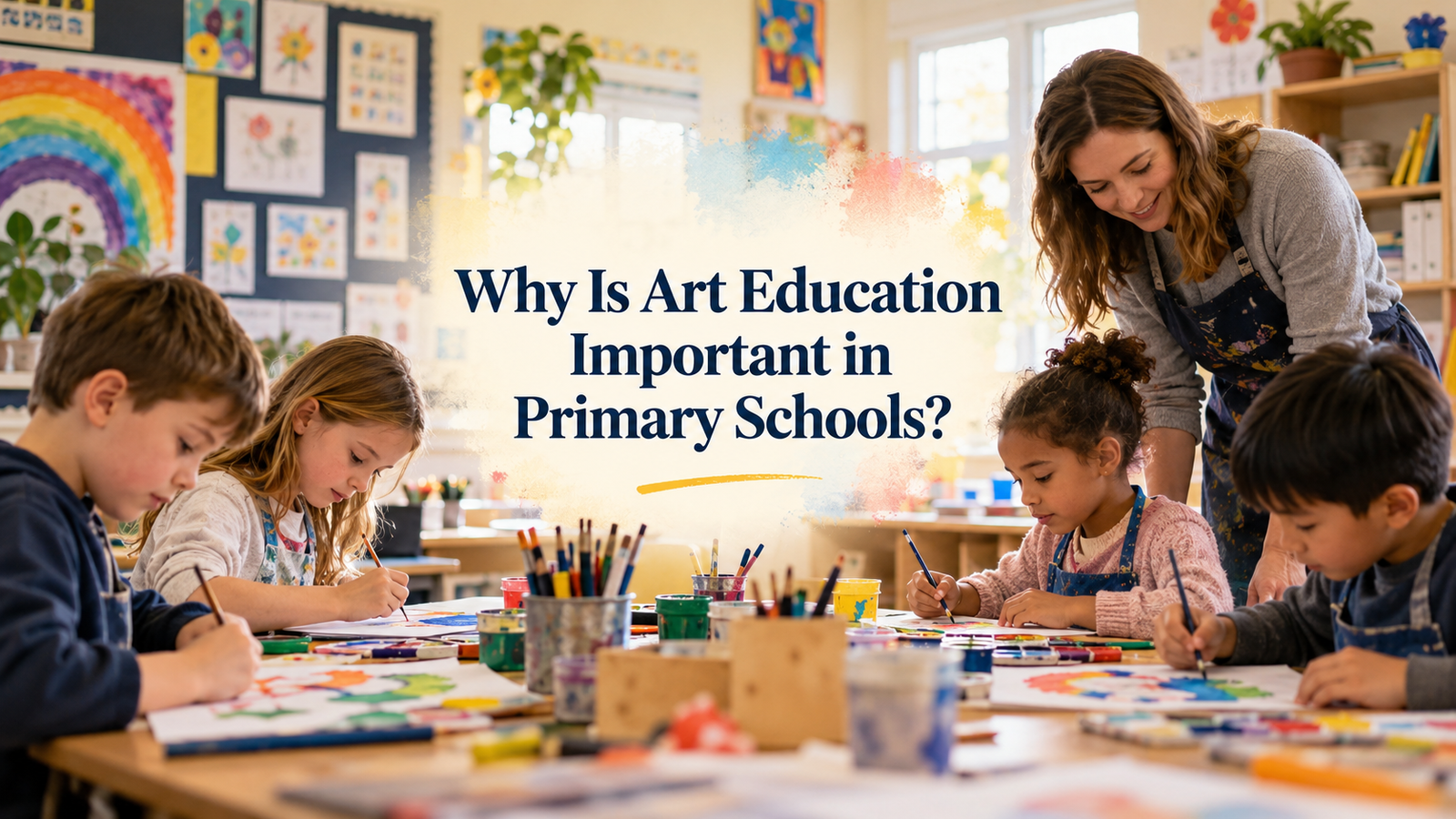
Art education is an important part of primary school learning because it helps children develop creativity, confidence, communication skills, and emotional understanding. During the early years of education, children are naturally curious about colors, shapes, pictures, and the world around them. Art gives them an opportunity to explore these interests while learning valuable skills that support their overall development.
Primary schools are responsible for more than teaching reading, writing, and mathematics. They also help children develop their personalities, discover their abilities, and understand how to interact with others. Art education supports these goals by creating an environment where students can express their thoughts and explore new ideas.
Drawing, painting, coloring, paper crafting, and other creative activities allow children to learn through practical experiences. These activities encourage imagination and help students become more involved in classroom learning.
Understanding why art education is important in primary schools can help parents, teachers, and school administrators recognize its value in building a balanced educational experience.
What Is Art Education in Primary Schools?
Art education refers to learning activities that help students understand and practice different forms of creative expression. In primary schools, it usually includes drawing, painting, coloring, clay modeling, paper folding, collage making, and simple craft projects.
The main purpose of art education is not to turn every child into a professional artist. Instead, it provides opportunities for children to develop their imagination, improve practical skills, and express personal ideas.
For example, a teacher may ask students to draw their favorite place, create a picture of their family, or make an animal using colored paper. Although these activities appear simple, they encourage observation, decision making, and creative thinking.
Art lessons also introduce students to basic artistic concepts such as color combinations, patterns, textures, and shapes. As children practice these concepts, they gradually become more comfortable using different materials and techniques.
1. Art Education Encourages Creativity and Imagination
One of the greatest benefits of art education in primary schools is the development of creativity.
Young children often have imaginative ideas that they cannot fully explain through words. Art provides a practical way to turn these ideas into visible creations.
When students draw pictures or design craft projects, they make decisions about colors, shapes, and arrangements. Every decision gives them an opportunity to think independently.
For example, two children may receive the same instruction to draw a garden. One child might include colorful flowers, while another may draw trees, butterflies, and a small pond.
Both pictures represent different interpretations of the same topic.
This freedom encourages students to understand that creative problems can have several possible solutions.
Creative thinking can also support learning in other subjects because students become more willing to explore ideas and consider different approaches.
2. Art Helps Children Express Their Emotions
Children sometimes find it difficult to describe their feelings clearly. They may experience happiness, sadness, excitement, frustration, or nervousness without knowing how to explain these emotions.
Art education creates opportunities for emotional expression.
A child may draw a peaceful landscape when feeling relaxed or use bright colors to represent excitement. Another student may create a picture that reflects an important personal experience.
Teachers can use creative activities to encourage children to talk about their thoughts and feelings.
For example, asking students to draw something that makes them happy can begin a simple classroom discussion about positive experiences.
However, teachers should avoid assuming that a particular color or drawing always represents a specific emotion.
The real benefit comes from allowing children to express themselves without unnecessary judgment.
A supportive art classroom can help students feel heard, respected, and comfortable sharing their ideas.
3. Art Education Builds Confidence in Young Learners
Confidence plays an important role in the educational development of primary school students.
Some children hesitate to participate in classroom discussions because they fear making mistakes. Others may struggle with reading or mathematics and begin to doubt their abilities.
Art education offers another opportunity to experience achievement.
When a child completes a drawing, painting, or craft project, the finished work can provide a sense of accomplishment.
Positive feedback from teachers can strengthen this feeling.
For example, instead of saying that one drawing is better than another, a teacher can appreciate the effort, creativity, and improvement shown by each student.
Displaying students’ artwork in the classroom can also make children feel that their contributions are valued.
Over time, these experiences may encourage students to participate more confidently in different learning activities.
4. Art Activities Improve Fine Motor Skills
Fine motor skills involve the coordination of small muscles, particularly those used in the hands and fingers.
These skills are essential for everyday classroom activities such as writing, cutting paper, turning pages, and handling learning materials.
Art education provides regular opportunities to practice fine motor movements.
Holding a pencil, using a paintbrush, cutting shapes, and folding paper all require controlled hand movements.
For example, coloring inside a shape encourages children to practice hand control and coordination.
Similarly, making paper crafts helps students develop accuracy when folding, cutting, and attaching materials.
Younger students may initially find these tasks difficult. However, suitable activities and regular practice can improve their ability to handle classroom tools.
Teachers should select materials according to students’ ages and abilities so that creative learning remains safe and enjoyable.
5. Art Supports Better Observation Skills
Observation is an important learning skill because it helps children recognize details, understand differences, and notice patterns.
Art education encourages students to look carefully at objects before drawing or describing them.
For example, a teacher may place a flower on a desk and ask students to draw what they see.
Children begin noticing details such as the shape of petals, the color of leaves, and the position of the stem.
These observations require attention and concentration.
Similar skills are useful in subjects such as science, where students examine plants, animals, and natural objects.
Art activities can also help children recognize shapes, sizes, textures, and spatial relationships.
By learning to observe their surroundings more carefully, students develop a stronger awareness of the environment.
6. Art Education Encourages Problem Solving
Creative activities often require children to solve small problems independently.
A student making a paper house may need to decide how to keep the walls standing. Another child creating a collage may need to arrange different shapes within a limited space.
Such situations encourage planning, experimentation, and decision making.
Sometimes a creative idea does not work as expected.
For example, a student may discover that too much glue makes a paper project difficult to handle.
Instead of abandoning the task, the child can try another approach.
Teachers can support this process by asking simple questions such as, “What could you try differently?” or “How can you make this stronger?”
These experiences help students understand that mistakes can be part of learning.
Art education therefore provides a practical environment for developing patience, flexibility, and problem solving skills.
7. Art Makes Classroom Learning More Interesting
Primary school children often learn better when educational activities include practical experiences and meaningful participation.
Art can make classroom lessons more engaging by connecting academic topics with creative projects.
For example, students learning about animals can draw different animal species and identify their main features.
During a lesson about plants, children can create pictures showing roots, stems, leaves, and flowers.
Teachers may also use colorful charts, posters, and simple models to explain difficult concepts.
These activities provide visual examples that can support understanding.
Art should not replace important academic instruction. Instead, it can strengthen lessons by offering another way to explore educational content.
When students are actively involved in creating something related to a topic, they may find the learning experience more memorable and enjoyable.
8. Art Education Develops Communication Skills
Communication involves more than speaking and writing. Children also communicate through pictures, gestures, symbols, and creative expression.
Art education helps students understand these different forms of communication.
When children create artwork, they often have ideas or stories behind their designs.
Teachers can encourage them to explain what they have made and why they selected particular colors or objects.
For example, a student might draw a village scene and describe the houses, people, and activities shown in the picture.
This exercise provides an opportunity to practice speaking and organizing thoughts.
Listening to classmates explain their artwork also encourages respectful communication.
Students gradually learn that people may understand and represent the same subject in different ways.
These experiences support classroom discussion and social interaction.
9. Art Promotes Teamwork and Cooperation
Although many art activities are completed individually, group projects can also play an important role in primary education.
Teachers may ask students to create a classroom poster, decorate a noticeboard, or prepare a shared display.
Such activities require cooperation.
Children must discuss ideas, share materials, divide responsibilities, and respect one another’s contributions.
For example, during a group project about environmental protection, some students may draw trees while others create animals or write simple messages.
Working together helps children understand the importance of collective effort.
It also provides opportunities to practice patience and resolve minor disagreements.
Teachers should ensure that every student has a meaningful role so that group activities remain inclusive.
Through these experiences, children can develop social skills that are useful both inside and outside school.
10. Art Introduces Children to Culture and Traditions
Art is closely connected to history, culture, and community traditions.
Primary school art education can introduce students to different artistic styles, traditional crafts, and cultural designs.
Children may learn about regional patterns, traditional decorations, historical buildings, and local handmade products.
For example, schools in Pakistan can introduce students to truck art, traditional embroidery patterns, pottery designs, and regional handicrafts.
These examples help children recognize the artistic traditions found in their communities.
Teachers can also introduce suitable artwork from other countries.
Learning about different artistic traditions encourages cultural awareness and respect.
Students begin to understand that people express their identities and experiences through different forms of art.
Such lessons can make education more meaningful by connecting classroom activities with the wider world.
11. Art Education Supports Concentration and Patience
Many creative projects require attention over a period of time.
When children paint a picture, complete a collage, or build a model, they must focus on individual steps before reaching the final result.
This process provides opportunities to practice concentration.
For example, creating a paper flower may involve drawing petals, cutting shapes, arranging pieces, and attaching them carefully.
Children learn that some tasks require patience and repeated effort.
Completing a challenging project can also teach students the value of persistence.
Teachers should avoid expecting perfect results, particularly from younger children.
Instead, they can encourage students to appreciate their progress and continue improving their work.
Art activities are most beneficial when children have enough time to explore ideas without unnecessary pressure.
12. Art Helps Teachers Recognize Different Learning Strengths
Every child has a unique combination of interests, abilities, and learning preferences.
Some students enjoy reading and writing, while others show greater enthusiasm for practical or visual activities.
Art education gives teachers another opportunity to observe students’ strengths.
A child who struggles to explain an idea verbally may communicate it effectively through drawing.
Another student may demonstrate excellent planning skills while constructing a simple model.
These observations can help teachers provide more balanced classroom experiences.
However, students should not be permanently labeled according to one preferred learning style.
Children benefit from developing many different abilities.
Art education contributes to this development by allowing students to explore skills that may not always receive attention during traditional academic lessons.
13. Art Encourages Independent Thinking
Independent thinking helps children develop personal opinions and make thoughtful decisions.
Art education supports this skill by allowing students to make creative choices.
During an open art activity, children may decide what to draw, which materials to use, and how to organize their work.
These choices encourage personal responsibility.
For example, if students are asked to create a poster about a clean school environment, each child may select a different message or design.
Some might focus on planting trees, while others may highlight waste disposal or water conservation.
Teachers can provide guidance without controlling every detail of the project.
When students have reasonable creative freedom, they learn to trust their ideas and explain their decisions.
This can contribute to greater independence in other classroom activities.
14. Art Creates an Inclusive Learning Environment
A supportive primary school should provide opportunities for children with different abilities and backgrounds to participate.
Art education can contribute to inclusion because many creative activities can be adapted to individual needs.
For example, students who find detailed drawing difficult may enjoy painting with larger brushes, making collages, or working with clay.
Teachers can provide alternative tools and materials when necessary.
The purpose is to make participation possible rather than require every student to produce identical work.
Art also allows children to share ideas without depending entirely on advanced reading or writing skills.
When teachers value effort, creativity, and individual progress, students are more likely to feel accepted.
An inclusive art classroom encourages respect for differences and helps children recognize the value of everyone’s contribution.
15. Art Education Can Support Academic Subjects
Art education and academic learning can complement each other.
Creative activities provide opportunities to represent information visually and explore concepts through practical examples.
In mathematics, students may create repeating patterns, identify geometric shapes, or explore symmetry through drawing.
In science, they can illustrate plant structures, weather conditions, or animal habitats.
In language lessons, students may draw scenes from stories and describe their pictures using new vocabulary.
For social studies, children can create maps, community illustrations, or posters about local traditions.
These activities do not guarantee better academic results, but they can help students engage with information through different approaches.
When teachers connect art projects with clear educational objectives, students gain additional opportunities to understand and apply classroom knowledge.
How Can Primary Schools Improve Art Education?
Schools can strengthen art education by making creative learning a regular part of the timetable.
Art should not be treated only as an occasional activity for special events or classroom decoration.
Children need consistent opportunities to explore materials, practice skills, and develop their ideas.
Teachers can improve art lessons through simple approaches:
- Provide age appropriate drawing and craft materials.
- Encourage original ideas rather than copying every example.
- Appreciate effort and improvement instead of judging artistic talent.
- Include individual and group creative activities.
- Connect suitable art projects with academic subjects.
- Introduce students to local cultural traditions.
- Display student artwork respectfully.
- Allow enough time for creativity and experimentation.
Schools do not necessarily need expensive equipment to provide meaningful art education.
Pencils, paper, crayons, recycled cardboard, and other affordable materials can support a wide variety of projects.
The quality of the learning experience depends largely on thoughtful teaching, suitable materials, and opportunities for participation.
What Is the Role of Teachers in Art Education?
Teachers play an important role in creating a positive environment for artistic learning.
Their responsibility is not simply to demonstrate how to draw or paint. They must also encourage curiosity and help students develop confidence in their creative abilities.
A good art teacher understands that children progress at different rates.
Some students may complete projects quickly, while others need additional guidance.
Instead of comparing students, teachers can focus on individual development.
Open questions such as “What inspired your picture?” and “What would you like to add?” encourage children to reflect on their work.
Teachers should also provide constructive feedback that recognizes creativity, effort, and developing skills.
By maintaining a respectful classroom atmosphere, teachers can make art education enjoyable and educationally meaningful.
Frequently Asked Questions
Why is art education necessary in primary schools?
Art education is important because it encourages creativity, emotional expression, confidence, communication, and practical skill development. It also provides children with opportunities to explore ideas through enjoyable activities.
How does art education help children learn?
Art activities can support observation, concentration, problem solving, and visual understanding. Teachers can also connect creative projects with subjects such as mathematics, science, and language.
Can art education improve children’s confidence?
Art education can help build confidence by giving children opportunities to complete projects, make independent choices, and receive positive feedback about their efforts.
What art activities are suitable for primary school students?
Drawing, painting, coloring, paper folding, collage making, clay modeling, and simple craft projects are suitable when materials and instructions match children’s ages and abilities.
Is art education important for children who are not good at drawing?
Yes. Art education is not limited to drawing ability. Its purpose includes encouraging creative thinking, self expression, cooperation, observation, and practical learning. Every child can benefit from suitable artistic activities.
Conclusion
Art education is an essential part of a balanced primary school experience. It provides children with opportunities to explore their imagination, express emotions, build confidence, and develop important practical and social skills.
Through drawing, painting, and creative projects, students can improve observation, practice problem solving, and learn to appreciate different ideas. Art also helps teachers create engaging lessons and introduces children to cultural traditions and artistic expression.
The importance of art education in primary schools extends beyond producing attractive pictures or classroom decorations. Its real value lies in helping children become curious, confident, thoughtful, and creative learners.
When schools provide regular opportunities for artistic expression, they support the broader development of children and help make primary education more enjoyable, inclusive, and meaningful.