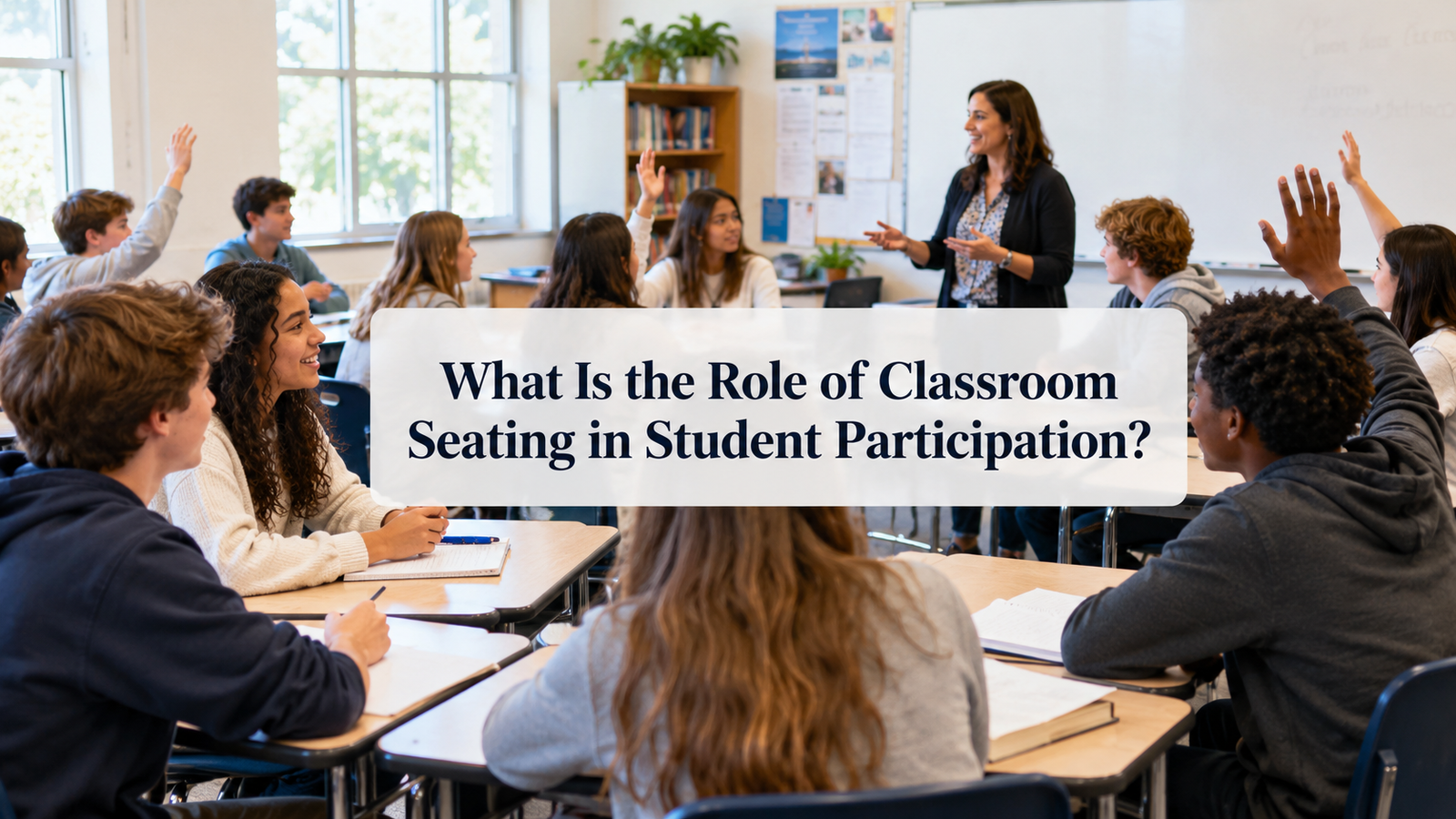
Classroom seating plays an important role in shaping how students learn, communicate, and participate in educational activities. The arrangement of desks and chairs may seem like a simple part of classroom management, but it can influence student confidence, attention, interaction, and overall learning experiences. A well organized classroom encourages students to become active participants rather than passive listeners.
When we think about an effective learning environment, we often focus on teaching methods, educational materials, and classroom technology. However, the physical arrangement of a classroom also deserves attention. Where students sit can affect how easily they communicate with teachers, interact with classmates, and participate in discussions.
Educational research suggests that classroom seating arrangements can influence student behavior and engagement, although the results depend on the activity, classroom environment, and individual learning needs.
Understanding the role of classroom seating in student participation can help teachers create learning spaces that support communication, cooperation, and academic development.
Understanding Classroom Seating Arrangements
Classroom seating arrangements refer to the different ways desks, chairs, and learning spaces are organized within a classroom. Teachers usually select a seating arrangement based on classroom size, the number of students, teaching objectives, and the activities being conducted.
Traditional classrooms often have desks arranged in straight rows facing the teacher. This arrangement can work well for lectures, individual assignments, and activities that require students to focus on the front of the classroom.
Modern teaching approaches may include group tables, circular seating, or flexible arrangements that allow students to move between different learning activities.
Each seating arrangement has its own advantages. The goal is not to identify one perfect arrangement but to choose a classroom layout that supports meaningful student participation.
For example, students may benefit from sitting in small groups during collaborative projects, while individual seating may be more suitable during examinations.
How Classroom Seating Influences Student Participation
Student participation involves more than answering questions during lessons. It includes listening carefully, sharing ideas, asking questions, completing activities, and cooperating with classmates.
Classroom seating arrangements can influence these behaviors by changing how students see, hear, and interact with one another.
Students who can clearly see the teacher and classroom materials may find it easier to follow lessons. Similarly, students sitting in arrangements that encourage conversation may feel more comfortable contributing to group discussions.
Seating can also affect opportunities for communication. A student sitting at the back of a crowded classroom might experience different learning conditions from someone sitting near the teacher.
However, participation is not determined by seating alone. Teaching strategies, classroom relationships, student confidence, and lesson content are equally important.
An effective classroom seating plan should support these elements rather than replace them.
1. Traditional Row Seating and Student Attention
Traditional row seating is one of the most familiar classroom arrangements. Desks are placed in straight lines, with students facing the teacher or classroom board.
This arrangement is commonly used because it provides a clear view of the teaching area and makes classroom organization relatively simple.
Row seating can be particularly useful during lectures, written examinations, and independent learning activities.
Students generally have fewer opportunities for direct conversation with classmates sitting beside or behind them. This may help reduce unnecessary discussions during activities requiring individual concentration.
Teachers can also observe student behavior while moving between rows.
However, traditional rows may limit interaction during lessons that depend heavily on discussion and teamwork.
Students may become more focused on listening than actively exchanging ideas, especially when teachers rely mainly on lectures.
To encourage participation, teachers can combine row seating with questioning activities, short discussions, and opportunities for students to share their opinions.
2. Group Seating Encourages Collaborative Learning
Group seating involves arranging desks so that several students can sit together and work as a team.
This classroom seating arrangement is often used for collaborative learning, problem solving, creative assignments, and practical educational activities.
When students sit in groups, they can communicate directly, discuss different perspectives, and help one another understand difficult concepts.
For example, during a science lesson, students sitting together may discuss an experiment, compare observations, and prepare a shared explanation.
Group seating can also encourage quieter students to contribute because speaking with a few classmates may feel less intimidating than addressing the entire classroom.
However, teachers should organize group activities carefully. Without clear instructions, group seating may lead to unnecessary conversations or unequal participation.
Assigning responsibilities and encouraging respectful communication can help ensure that every student has an opportunity to contribute.
3. Circular Seating Supports Open Discussions
Circular seating places students in a circle or an arrangement where they can see one another.
This layout is particularly useful for classroom discussions, storytelling, debates, and activities that encourage the exchange of ideas.
One important advantage of circular seating is improved visibility between participants.
Students can observe facial expressions, maintain eye contact, and respond more naturally during conversations.
This arrangement may also create a stronger sense of equality because students are not positioned in traditional front and back rows.
For example, during a literature lesson, students can sit in a circle and discuss the meaning of a story. Each participant has an opportunity to express an interpretation and listen to different viewpoints.
Circular seating does require enough classroom space and may be less practical in large classes.
Nevertheless, it can be an effective arrangement when the main objective is meaningful conversation and active student involvement.
4. U Shaped Seating Improves Teacher Interaction
The U shaped classroom seating arrangement places desks in a formation resembling the letter U.
Students sit around three sides of an open area, while the teacher can move within the central space.
This arrangement provides opportunities for both teacher instruction and student interaction.
Students usually have a clear view of the board, presentation area, and many of their classmates.
The teacher can make eye contact with students and encourage participation through questions and discussions.
U shaped seating is especially suitable for presentations, demonstrations, seminars, and interactive lessons.
For example, students learning public speaking skills may benefit from this arrangement because they can present their ideas while maintaining contact with the audience.
However, U shaped seating requires careful planning in classrooms with limited space.
Teachers should ensure that students can move comfortably and access learning materials without unnecessary difficulty.
5. Classroom Seating Affects Student Confidence
Confidence is an important factor in classroom participation.
Some students naturally enjoy speaking in front of others, while others may hesitate because they fear making mistakes or receiving negative reactions.
A supportive classroom seating arrangement can help create conditions where students feel more comfortable sharing their thoughts.
For example, a shy student might participate more actively during a discussion with three classmates than during a conversation involving the entire class.
Similarly, sitting where a student can easily communicate with the teacher may make asking questions feel more manageable.
Teachers should avoid assuming that every quiet student needs to sit in the front row.
Instead, they can consider individual preferences, learning difficulties, friendships, and classroom behavior when planning seating arrangements.
Confidence grows through encouragement, positive feedback, and respectful classroom relationships. Seating can support this process, but emotional safety remains essential.
6. Seating Arrangements Influence Classroom Communication
Effective communication is one of the foundations of successful education.
Students need opportunities to ask questions, explain their understanding, and listen to different opinions.
The physical organization of the classroom can either support or limit these interactions.
For instance, students sitting face to face during group activities can exchange ideas without repeatedly turning around.
Meanwhile, students sitting in rows may find it easier to focus on direct teacher instruction.
Teachers should consider the communication requirements of each lesson before deciding how students should sit.
A classroom discussion may benefit from circular seating, while a mathematics assessment may require individual desks.
Choosing arrangements according to learning objectives makes classroom communication more purposeful.
7. The Relationship Between Seating and Concentration
Student concentration can be influenced by classroom conditions such as noise, lighting, temperature, visibility, and seating positions.
Students who cannot clearly see the board or hear instructions may struggle to remain engaged.
Likewise, sitting near distracting activities or frequent movement may affect attention for some learners.
A thoughtful classroom seating plan can reduce avoidable distractions and support concentration.
Teachers may need to consider students with visual difficulties, hearing difficulties, or specific learning requirements.
Providing suitable seating positions can help these students access lessons more comfortably.
However, no seating arrangement guarantees complete concentration.
Teachers must also use engaging teaching methods, provide clear instructions, and create appropriate classroom routines.
Combining suitable seating with effective teaching practices is more beneficial than relying on furniture arrangement alone.
8. Flexible Seating Creates Different Learning Opportunities
Flexible seating allows classroom arrangements to change according to educational activities and student needs.
Instead of keeping desks in one fixed position throughout the school year, teachers may reorganize seating for discussions, group work, independent study, or presentations.
Some classrooms also provide different seating options, such as standard chairs, stools, or designated reading areas.
The main purpose of flexible seating is to create a learning environment that supports different activities.
For example, students might begin a lesson in rows while listening to an explanation. Later, they may move into groups to complete an assignment.
This approach can help teachers match the classroom environment with the learning task.
However, flexibility requires classroom rules and proper supervision.
Teachers should ensure that furniture is safe, movement remains organized, and every student has an appropriate working space.
Flexible seating works best when students understand the purpose of each arrangement.
9. Classroom Seating Encourages Social Development
Classrooms are not only places for academic learning. They are also environments where students develop communication skills, cooperation, patience, and respect.
Seating arrangements can provide opportunities for social interaction and relationship building.
When students work with different classmates, they may learn to appreciate different perspectives and develop teamwork skills.
Group seating can encourage students to share responsibilities, solve disagreements, and support classmates who need assistance.
Teachers can occasionally change groups to help students interact beyond their usual friendship circles.
However, seating changes should be managed carefully.
Students who experience anxiety, social difficulties, or other challenges may need additional support when adjusting to new groups.
A successful classroom seating arrangement should encourage inclusion without making students uncomfortable or isolated.
10. The Importance of Seating for Inclusive Education
Inclusive education aims to provide meaningful learning opportunities for students with different abilities, backgrounds, and educational needs.
Classroom seating can play an important role in supporting this objective.
Teachers should consider whether students can move safely, access materials, see instructional displays, and communicate effectively.
For example, a student with hearing difficulties may benefit from a position that provides a clear view of the teacher’s face.
A student using a wheelchair may require an accessible desk and sufficient space to move around the classroom.
Students who need additional instructional support may benefit from seating positions that allow convenient communication with the teacher.
Inclusive seating arrangements should respect student dignity and privacy.
Rather than making assumptions, teachers can consult students and relevant support staff to understand individual requirements.
The goal is to create a classroom where participation is accessible to everyone.
11. How Teachers Can Choose the Right Seating Arrangement
Choosing an effective classroom seating arrangement requires careful consideration of several factors.
Teachers should begin by identifying the main objective of the lesson.
If students are completing individual written assignments, traditional seating may provide a suitable environment.
If the lesson involves teamwork, group seating may encourage communication and shared problem solving.
For classroom discussions, circular or U shaped seating may create better opportunities for interaction.
Classroom size is another important consideration. A layout that works in a small classroom may be difficult to implement in a room containing many students.
Teachers should also observe how students respond to different seating arrangements.
If participation improves during group activities, the teacher may decide to use that arrangement more frequently.
If noise or distractions increase, adjustments may be necessary.
Regular observation helps teachers make practical decisions based on student behavior and learning needs.
12. Why Changing Seating Arrangements Can Be Helpful
Keeping the same seating arrangement for an entire academic year may not support every teaching activity.
Students encounter different learning situations, including lectures, experiments, discussions, examinations, and creative projects.
Changing seating arrangements gives teachers an opportunity to create conditions suitable for these activities.
It may also allow students to communicate with classmates they do not usually work with.
For example, a teacher might organize students into small groups during a geography project and return to traditional rows during an individual assessment.
These changes can introduce variety into classroom routines without requiring expensive equipment.
However, teachers should avoid changing arrangements without a clear purpose.
Frequent movement can waste instructional time if students do not understand classroom expectations.
A balanced approach allows teachers to introduce changes when they provide educational value.
13. Common Mistakes in Classroom Seating Plans
Even a well designed classroom can experience participation problems if seating decisions are made without considering student needs.
One common mistake is assuming that the same arrangement works for every lesson.
Another is focusing only on classroom appearance rather than communication, visibility, and accessibility.
Teachers may also unintentionally isolate students by placing them away from classmates without a suitable educational reason.
Similarly, allowing students to choose seats without guidance can sometimes create groups that exclude others or increase distractions.
A classroom seating plan should balance student comfort with educational objectives.
Teachers can reduce these problems by observing classroom interactions, listening to student feedback, and making thoughtful adjustments.
The effectiveness of seating arrangements should be judged by how well they support learning rather than how attractive the classroom looks.
14. The Role of Classroom Seating in Academic Performance
Classroom seating may influence academic performance indirectly by affecting participation, attention, and interaction.
Students who feel comfortable asking questions and discussing difficult concepts may have more opportunities to clarify misunderstandings.
Similarly, cooperative activities can provide opportunities for students to explain ideas and learn from classmates.
However, academic success depends on many factors, including teaching quality, study habits, educational resources, motivation, and family support.
A particular seating arrangement does not automatically improve examination results.
Research findings also vary depending on student age, classroom activities, and educational settings.
Teachers should therefore view seating as one part of an effective learning environment.
When classroom organization supports appropriate teaching methods, it can contribute to more productive educational experiences.
Frequently Asked Questions
What is the best classroom seating arrangement for student participation?
There is no single arrangement that works best for every classroom. Group seating can support teamwork, circular seating can encourage discussions, and traditional rows can support individual concentration. The best choice depends on the lesson and student needs.
Does sitting in the front row improve learning?
Sitting near the front may help some students see instructional materials and hear explanations more clearly. However, front row seating does not guarantee better learning outcomes. Student motivation, teaching quality, and individual needs also matter.
How does group seating help students?
Group seating creates opportunities for students to share ideas, discuss lessons, complete collaborative assignments, and develop communication skills. Teachers should provide clear instructions to ensure balanced participation.
Can classroom seating reduce distractions?
Thoughtful seating arrangements can reduce some distractions by improving visibility, managing movement, and separating students from unnecessary disturbances. Effective classroom rules and engaging lessons are also important.
Why should teachers change classroom seating arrangements?
Teachers may change seating arrangements to support different learning activities, encourage new interactions, improve accessibility, or address classroom management challenges. Changes should have a clear educational purpose.
Conclusion
Classroom seating plays a meaningful role in student participation by influencing communication, concentration, confidence, and opportunities for collaboration. The arrangement of desks and chairs can shape how students interact with teachers, engage in discussions, and complete classroom activities.
Traditional rows, group tables, circular seating, and U shaped arrangements each offer different educational advantages. No single layout is suitable for every classroom or learning objective.
Teachers can create more supportive learning environments by selecting seating arrangements according to lesson requirements, classroom space, accessibility, and student preferences.
The most effective approach involves observing student participation, listening to feedback, and making adjustments when necessary.