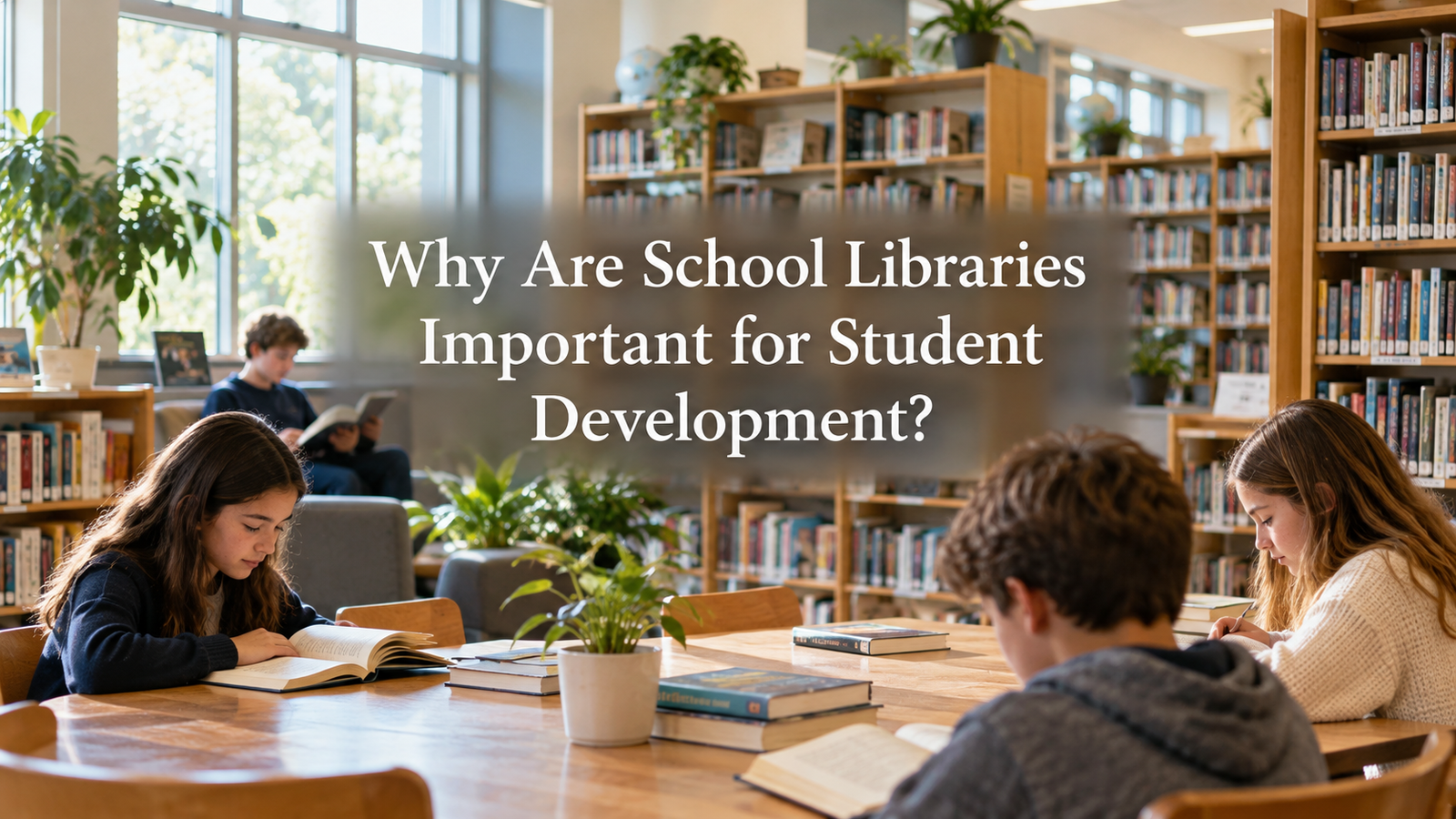
School libraries are an important part of a good educational environment. They provide students with opportunities to read, explore new ideas, develop useful skills, and become independent learners. Although classrooms are the main places where teachers deliver lessons, school libraries offer additional resources that help students understand subjects more deeply.
A school library is much more than a room filled with books. It is a learning space where students can discover information, improve their reading habits, complete assignments, and develop curiosity about the world. Libraries also encourage creativity, critical thinking, communication, and personal growth.
In modern education, students need more than textbook knowledge to succeed. They must learn how to find reliable information, solve problems, express their thoughts, and continue learning throughout their lives. School libraries support these abilities by providing access to educational materials and a peaceful environment for learning.
Understanding why school libraries are important for student development can help teachers, parents, and school administrators recognize their value in building a strong educational foundation.
1. School Libraries Encourage Regular Reading Habits
One of the greatest benefits of school libraries is their ability to encourage students to read regularly. Reading is an essential skill that supports learning in almost every academic subject.
When students have access to interesting books, they are more likely to develop a positive relationship with reading. A school library usually contains storybooks, biographies, science books, history materials, reference books, and educational magazines.
These resources allow students to choose reading materials according to their interests and abilities.
For example, a student who enjoys animals may begin reading books about wildlife. Over time, this interest can encourage the student to explore biology, environmental science, and nature conservation.
Regular reading helps students improve concentration, understand different writing styles, and become more confident learners.
School libraries can also organize reading activities that make books more enjoyable. Storytelling sessions, reading challenges, and book discussions can motivate students to spend more time reading.
2. Libraries Improve Vocabulary and Language Skills
Strong language skills are necessary for academic success and effective communication. School libraries help students improve their vocabulary, grammar, reading comprehension, and writing abilities.
When students read different types of books, they encounter new words and expressions. They gradually learn how these words are used in sentences and different situations.
This natural exposure to language can be more meaningful than memorizing vocabulary lists without context.
For example, reading a historical story introduces students to words related to culture, society, and historical events. Similarly, science books introduce technical terms that support classroom learning.
School libraries also provide opportunities to improve writing skills.
Students who regularly read well written books often become more familiar with sentence structure, paragraph organization, and clear explanations.
These experiences can help them express their thoughts more effectively in essays, assignments, and classroom discussions.
3. School Libraries Support Academic Performance
Another important reason school libraries matter is their contribution to academic learning.
Students sometimes need additional explanations beyond their classroom textbooks. A school library provides educational resources that help them explore subjects from different perspectives.
For example, a student studying the solar system may find diagrams, astronomy books, encyclopedias, and other learning materials in the library.
These resources can make difficult topics easier to understand.
Libraries also support students who want to revise lessons, prepare presentations, or complete research assignments.
A quiet library environment allows students to focus on academic tasks without unnecessary distractions.
However, the academic benefits of a library depend on how effectively students use its resources. Regular access, suitable books, and guidance from teachers or librarians can make the learning experience more valuable.
4. Libraries Develop Independent Learning Skills
Independent learning means taking responsibility for understanding information and improving knowledge without depending entirely on teachers.
School libraries provide an excellent environment for developing this ability.
Instead of receiving every answer directly from a teacher, students can learn how to search for information, select suitable books, and understand educational materials.
For example, a teacher may ask students to prepare a short presentation about renewable energy.
Students can visit the library, explore books about solar power and wind energy, collect useful facts, and organize their findings.
This process teaches them how to manage information and complete tasks independently.
As students become more comfortable using library resources, they may develop greater confidence in their ability to learn unfamiliar topics.
These skills are valuable not only during school but also in college, university, and professional life.
5. School Libraries Strengthen Critical Thinking
Critical thinking is the ability to examine information carefully, ask meaningful questions, and make reasonable judgments.
School libraries contribute to critical thinking by exposing students to different ideas, opinions, and explanations.
When students read books about history, science, literature, and society, they begin to understand that many topics can be explored from more than one perspective.
For example, students researching environmental pollution may discover information about industrial activities, transportation, agriculture, and human behavior.
They can compare these explanations and consider possible solutions.
Libraries also help students distinguish between facts, opinions, and unsupported claims.
With proper guidance, students learn that information should not be accepted simply because it appears in a book or on a website.
They should examine the source, check evidence, and compare information before reaching conclusions.
This habit is particularly important in a world where large amounts of information are available online.
6. Libraries Encourage Creativity and Imagination
Creativity plays an important role in student development because it allows young learners to explore possibilities and express original ideas.
School libraries support creativity by providing access to stories, poetry, art books, biographies, and imaginative literature.
When students read fictional stories, they imagine characters, places, situations, and events.
This process can strengthen imagination and encourage creative expression.
For example, a student who enjoys adventure stories may become interested in writing original stories or creating illustrations.
Another student who reads about famous inventors may develop curiosity about designing useful objects.
Libraries can further encourage creativity through writing competitions, storytelling activities, drawing sessions, and book related projects.
Such experiences allow students to connect reading with practical and imaginative activities.

7. School Libraries Build Research Skills
Research skills are essential for students who want to understand topics thoroughly and complete academic projects successfully.
A school library introduces students to the basic process of gathering and organizing information.
Students learn how to identify useful resources, locate relevant material, take notes, and summarize important ideas.
They can also develop the habit of recording where information comes from.
For example, when preparing a project about water conservation, students may examine science textbooks, environmental publications, and reference materials.
They can collect information about water shortages, household consumption, and conservation methods.
After reviewing these resources, they can prepare a report using their own understanding.
This approach encourages meaningful learning rather than copying information without understanding it.
Research activities also prepare students for higher education, where independent investigation and proper source acknowledgment become increasingly important.
8. Libraries Provide a Peaceful Learning Environment
A comfortable and organized learning environment can make a significant difference in how students study.
School libraries generally offer spaces designed for reading, research, and quiet concentration.
Unlike busy classrooms or playgrounds, libraries can provide fewer distractions during independent study.
Students who find it difficult to concentrate in noisy surroundings may benefit from spending time in a peaceful library.
A well maintained library also teaches students to respect shared learning spaces.
They learn to handle books carefully, return materials to their proper places, and maintain a suitable atmosphere for others.
These simple habits encourage responsibility and discipline.
For students who lack a quiet study area at home, access to a school library may be especially valuable.
9. School Libraries Promote Equal Learning Opportunities
Not every student has the same access to educational resources outside school.
Some families can purchase many books, computers, and learning materials, while others may have limited financial resources.
School libraries can help reduce these differences by making educational materials available to all students.
A well equipped library allows learners to explore books and reference materials without purchasing them individually.
For example, a student who cannot afford additional science books may still access suitable materials through the school library.
Libraries can also provide learning resources for students with different reading abilities and educational needs.
Books with illustrations, large print materials, accessible digital resources, and age appropriate reading collections can make learning more inclusive.
Equal access to educational resources helps create a supportive environment where more students have opportunities to develop their abilities.
10. Libraries Improve Communication and Social Skills
Although libraries are commonly associated with silent reading, they can also support communication and social development.
Many school libraries organize group reading sessions, book discussions, presentations, and collaborative learning activities.
These activities allow students to share opinions and listen to different viewpoints.
For example, after reading the same story, students may discuss its characters, main message, and important events.
Some students may interpret the story differently, creating opportunities for respectful discussion.
Such experiences encourage students to explain their ideas clearly while respecting others.
Library activities can also help shy students participate in smaller learning groups where they may feel more comfortable expressing themselves.
Communication, listening, and cooperation are important skills that students can use throughout their education and future careers.
11. School Libraries Support Emotional and Personal Development
Books can introduce students to experiences, feelings, and challenges that differ from their own lives.
Reading stories about friendship, kindness, responsibility, courage, and perseverance can help students reflect on their own behavior.
For example, a story about a character overcoming a difficult situation may encourage students to think about patience and determination.
Books featuring people from different backgrounds can also help students develop empathy and respect for others.
A peaceful library may provide a comfortable space where students can enjoy reading or spend time reflecting.
However, books alone cannot solve every emotional or personal challenge. Support from teachers, parents, and school counselors remains important.
Libraries contribute to personal development by offering educational experiences that encourage understanding, reflection, and emotional awareness.
12. Libraries Teach Digital Literacy and Responsible Information Use
Modern school libraries are increasingly connected with digital learning.
Many provide access to computers, electronic books, educational databases, and other online resources.
These tools help students become familiar with digital information and responsible technology use.
Digital literacy involves more than knowing how to operate a computer.
Students also need to understand how to search effectively, recognize reliable sources, protect personal information, and use online materials ethically.
For example, a student searching for information about climate change may encounter websites containing accurate research alongside misleading claims.
A librarian or teacher can explain how to examine the author, publication date, supporting evidence, and reliability of the source.
These lessons help students become more careful and informed internet users.
Digital library resources can also complement printed books by offering additional ways to explore educational topics.
13. School Libraries Encourage Lifelong Learning
One of the most valuable contributions of school libraries is their role in developing an interest in lifelong learning.
Education should not end when students complete examinations or graduate from school.
People continue learning throughout their lives as they develop new skills, face challenges, and explore personal interests.
School libraries introduce students to the enjoyment of learning beyond compulsory lessons.
For example, a student may borrow a book about photography simply because the subject seems interesting.
Another student may explore gardening, astronomy, architecture, or computer technology.
Such experiences demonstrate that learning can be enjoyable even when it is not connected to grades.
Students who develop curiosity and positive reading habits during school may be more willing to continue exploring knowledge as adults.
14. The Role of Teachers and Librarians in Student Development
The presence of books does not automatically make a school library effective.
Teachers and librarians play important roles in helping students benefit from available resources.
Teachers can encourage students to use library books when preparing assignments and classroom projects.
They can also recommend suitable reading materials based on individual interests and academic needs.
Librarians help students locate books, understand library organization, and identify relevant information.
A knowledgeable librarian can introduce students to authors, subjects, and resources they might not discover independently.
Schools can strengthen library participation by arranging regular reading periods, educational workshops, and book related activities.
Collaboration between teachers and librarians can make library learning more closely connected with classroom education.
15. How Schools Can Make Their Libraries More Effective
Schools should give attention to library quality rather than focusing only on the number of books available.
An effective school library should contain updated, relevant, and age appropriate educational materials.
Books should cover different subjects, reading levels, cultures, and student interests.
Comfortable seating, proper lighting, clear organization, and a welcoming atmosphere can make the library more enjoyable.
Schools should also encourage students to participate in choosing new reading materials.
When students feel their interests are represented, they may become more enthusiastic about visiting the library.
Regular reading events, research activities, and library orientation sessions can further improve participation.
Where resources permit, schools can introduce computers and digital learning materials while continuing to maintain valuable printed collections.
Most importantly, library access should be consistent so that students can develop regular learning habits.
Frequently Asked Questions
Why are school libraries important for students?
School libraries provide access to books, educational resources, and learning opportunities. They support reading development, academic understanding, research skills, creativity, and independent learning.
How do school libraries improve student learning?
They help students explore classroom subjects more deeply, complete assignments, access additional explanations, and practice finding reliable information.
Can school libraries improve reading habits?
Yes. Access to interesting books, reading activities, and supportive guidance can encourage students to read more regularly and develop a lasting interest in books.
Why are librarians important in schools?
Librarians help students find appropriate resources, develop research skills, evaluate information, and discover reading materials suited to their interests and abilities.
Are school libraries still important in the digital age?
Yes. School libraries remain valuable because they combine printed resources, digital information, research guidance, and supportive learning spaces. They also help students use technology responsibly.
Conclusion
School libraries are essential learning spaces that contribute to the academic, intellectual, social, and personal development of students. They encourage reading, improve language abilities, strengthen research skills, and support independent learning.
Libraries also provide opportunities for creativity, critical thinking, communication, and responsible information use. By offering access to educational resources, they can help students from different backgrounds participate more fully in learning.
The importance of school libraries extends far beyond examination preparation. A good library encourages curiosity and teaches students that knowledge can be discovered through reading, exploration, and thoughtful questioning.
When schools invest in useful library resources, trained staff, and regular reading opportunities, they create an environment where students can become more confident and capable learners.
Ultimately, school libraries are important for student development because they help young people build the knowledge, habits, and skills needed for successful education and lifelong learning.