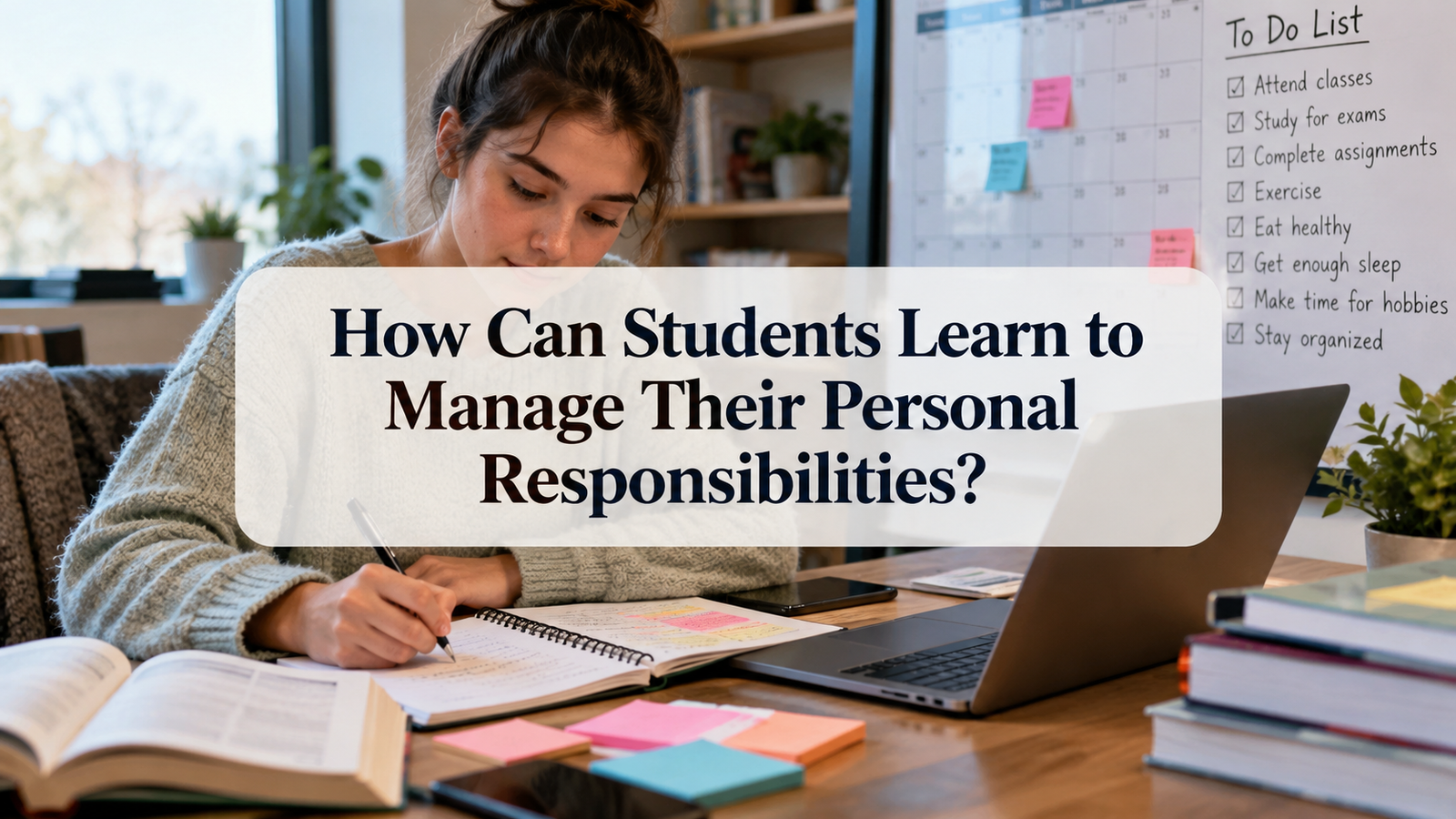
Learning to manage personal responsibilities is an important part of becoming a successful and independent student. Every student has different responsibilities, including completing homework, attending classes, managing time, helping family members, and making good decisions. These responsibilities may seem difficult at first, but students can develop the skills needed to handle them with regular practice.
Personal responsibility is not only about following rules or finishing assignments. It is also about understanding the importance of personal actions and accepting the results of decisions. When students become responsible, they learn how to organize their daily activities, solve problems, and work toward their goals.
Schools provide academic knowledge, but students also need practical life skills. Responsibility helps connect classroom learning with everyday life. Students who manage their responsibilities effectively are often better prepared to face academic challenges and future opportunities.
In this article, we will explore how students can learn to manage their personal responsibilities and develop habits that support their education and personal growth.
What Are Personal Responsibilities for Students?
Personal responsibilities are the duties and commitments that students are expected to manage in their everyday lives. These responsibilities may involve education, personal behavior, family activities, and relationships with others.
For example, completing school assignments on time is an academic responsibility. Keeping personal belongings organized is a daily responsibility. Respecting teachers, classmates, and family members is a social responsibility.
Students also have responsibilities toward their own health and well being. Getting enough sleep, maintaining personal hygiene, eating balanced meals, and participating in physical activities are important parts of responsible living.
The responsibilities of students usually increase as they grow older. Younger students may need help remembering their daily tasks, while older students are expected to make more independent decisions.
Understanding these responsibilities is the first step toward managing them successfully.
Why Is Personal Responsibility Important for Students?
Personal responsibility plays an important role in student development because it encourages independence, discipline, and confidence.
When students take responsibility for their work, they begin to understand the relationship between effort and results. They realize that regular preparation can improve their academic performance.
Responsibility also teaches students to become more dependable. Teachers and parents can trust students who complete their commitments without needing constant reminders.
Another important benefit is improved decision making. Responsible students learn to consider the possible consequences of their actions before making choices.
For example, a student who chooses to complete homework before watching television is practicing responsible decision making.
These small decisions gradually develop habits that can remain useful throughout adulthood.
1. Start by Understanding Daily Responsibilities
Students cannot manage their responsibilities properly unless they understand what is expected of them.
A useful starting point is identifying the tasks that need attention each day. These may include attending school, completing homework, reviewing lessons, preparing school materials, and helping with household activities.
Students can write these responsibilities in a notebook to develop a clearer understanding of their daily commitments.
It is also important to separate essential tasks from optional activities.
For example, preparing for an examination may be more important than spending extra time playing games.
When students understand their responsibilities, they can make better decisions about how to use their time.
Parents and teachers can support this process by explaining expectations clearly rather than simply giving instructions.
2. Create a Simple Daily Routine
A daily routine is one of the most effective ways to help students manage personal responsibilities.
A routine provides structure and reduces confusion about what needs to be done.
Students can divide their day into different activities, such as attending classes, studying, resting, exercising, and spending time with family.
For example, a student may return home from school, take a short break, complete homework, and then enjoy recreational activities.
Following a routine does not mean every minute must be planned. Students should have enough flexibility to adjust their schedules when unexpected situations occur.
The main purpose of a routine is to create consistency.
When students repeat positive habits regularly, managing responsibilities becomes easier and more natural.
3. Learn Effective Time Management Skills
Time management is an essential skill for students who want to balance academic work and personal activities.
Every student has a limited number of hours each day. Learning how to use those hours wisely can reduce unnecessary pressure.
Students should begin by estimating how much time different tasks require.
For example, completing mathematics homework may take forty minutes, while reading a textbook chapter may require twenty minutes.
Planning these activities helps students avoid rushing through assignments at the last moment.
It is also helpful to divide large tasks into smaller sections.
A student preparing a school project can complete research on one day, organize information on another day, and prepare the final presentation afterward.
This approach makes difficult responsibilities feel more manageable.
4. Set Realistic Personal Goals
Setting goals helps students understand what they want to achieve and what actions are necessary to reach those goals.
Goals can be related to academic performance, personal behavior, health, or daily habits.
For example, a student may decide to complete homework before dinner every day.
Another student may want to improve reading skills by reading ten pages of a book daily.
Effective goals should be realistic and specific.
Instead of setting a general goal such as becoming a better student, it is more useful to choose a clear action that can be measured.
Students should also review their progress regularly.
Achieving small goals builds confidence and encourages them to accept greater responsibilities.
5. Develop the Habit of Completing Tasks on Time
Completing tasks on time is an important sign of personal responsibility.
Students sometimes delay homework or other duties because they believe there is plenty of time available.
However, repeated delays can create stress and reduce the quality of work.
Students can overcome this problem by beginning assignments as soon as possible.
They can also establish personal deadlines that come before official submission dates.
For example, if a project must be submitted on Friday, students can aim to finish it by Wednesday.
This provides additional time for checking mistakes and making improvements.
Completing responsibilities on time also teaches students the value of commitment and reliability.
6. Learn to Make Independent Decisions
Developing independence is an important part of learning personal responsibility.
Students should gradually become capable of making appropriate decisions without depending on adults for every small matter.
These decisions may include choosing study times, organizing school materials, selecting educational activities, and solving simple problems.
However, independence does not mean refusing guidance.
Students should understand when they can make decisions themselves and when they need support from parents or teachers.
For example, a student can independently decide which homework assignment to complete first but may need help understanding a difficult academic topic.
Responsible decision making involves considering available options and choosing actions that support personal goals.
With practice, students become more confident in their judgment.
7. Take Responsibility for Mistakes
Making mistakes is a natural part of learning.
Responsible students understand that mistakes provide opportunities for improvement.
Instead of blaming others or making excuses, students should learn to recognize what went wrong.
For example, if a student forgets to complete an assignment, the best response is to acknowledge the mistake and develop a plan to prevent it from happening again.
This may involve writing homework in a notebook or setting a reminder.
Teachers and parents should encourage honest communication about mistakes.
Excessive criticism can sometimes make students afraid to admit difficulties.
A supportive environment helps students understand that responsibility involves learning from mistakes rather than expecting perfection.
8. Keep School Materials and Personal Belongings Organized
Organization makes it easier for students to complete responsibilities efficiently.
When books, notebooks, uniforms, and school supplies are kept in proper places, students spend less time searching for necessary items.
A simple organization system can make a noticeable difference.
Students can prepare their school bags in the evening and check whether they have everything required for the next day.
They can also organize notebooks according to subjects and keep important documents in separate folders.
Maintaining a clean study area can help reduce distractions.
These habits teach students to care for their belongings and develop a greater sense of ownership over their daily activities.
9. Balance Academic Responsibilities With Personal Life
Students need to understand that personal responsibility involves more than studying.
A healthy student lifestyle includes education, recreation, physical activity, family relationships, and adequate rest.
Spending every available hour on academic work may lead to tiredness and reduced motivation.
On the other hand, excessive entertainment can interfere with important responsibilities.
Students should learn to maintain a reasonable balance between these activities.
For example, completing homework before playing outdoor games allows students to enjoy recreation without worrying about unfinished work.
Taking regular breaks during study sessions can also support concentration.
A balanced routine helps students remain productive while protecting their physical and emotional well being.
10. Practice Self Discipline and Self Control
Self discipline is the ability to follow important commitments even when other activities seem more attractive.
Students often face distractions from smartphones, television, games, and social media.
Managing these distractions requires self control.
A student may decide to keep a smartphone away while studying or turn off unnecessary notifications.
Creating a quiet study environment can also make concentration easier.
Self discipline develops gradually through repeated choices.
Students do not need to change every habit immediately. Beginning with one small improvement is often more practical.
For example, studying for twenty focused minutes each day can help establish a consistent learning habit.
Over time, these efforts strengthen the ability to manage personal responsibilities independently.
11. Understand the Importance of Honesty and Accountability
Honesty is closely connected to personal responsibility.
Students should understand that being responsible means telling the truth about their actions and accepting accountability for their decisions.
For example, students should complete their own assignments rather than copying another person’s work.
If they do not understand a lesson, asking for help is more responsible than pretending they have completed the task successfully.
Accountability also involves keeping promises and respecting commitments.
When students demonstrate honesty, they build trust with teachers, classmates, and family members.
These qualities are valuable not only in school but also in future employment and personal relationships.
12. Learn to Manage Money and Personal Resources
Basic financial responsibility is another useful life skill for students.
Students who receive pocket money can learn how to manage small amounts through planning and careful spending.
For example, they may divide their money between necessary purchases, savings, and occasional personal activities.
Learning the difference between needs and wants is particularly important.
Buying school supplies may be necessary, while purchasing an additional toy or game may be optional.
Parents can introduce simple budgeting activities to help children understand the value of money.
Students can also practice responsibility by avoiding unnecessary waste of food, water, electricity, and school materials.
These habits encourage thoughtful use of available resources.
13. Ask for Help When Responsibilities Become Difficult
Being responsible does not mean handling every challenge alone.
Students sometimes face academic pressure, personal difficulties, or unexpected situations that make daily tasks harder to manage.
Recognizing when help is needed is itself a responsible decision.
Students should feel comfortable discussing challenges with teachers, parents, or trusted adults.
For example, a student who struggles to understand a science assignment should ask for clarification rather than ignoring the work.
Seeking assistance early may prevent small difficulties from becoming larger problems.
Students can also learn from classmates through appropriate group discussions and shared learning activities.
The goal is to develop independence while understanding the value of guidance and cooperation.
14. Review Personal Progress Regularly
Regular self reflection helps students recognize their achievements and identify areas that need improvement.
Students can review their responsibilities at the end of each day or week.
They may ask themselves whether they completed homework, followed their study routine, arrived at school on time, and fulfilled personal commitments.
Writing short reflections in a notebook can make this process more effective.
For example, a student might notice that homework is often delayed because too much time is spent using a smartphone.
Recognizing this pattern allows the student to make a practical adjustment.
Progress should be measured through consistent improvement rather than perfection.
Even small positive changes can lead to stronger personal responsibility over time.
How Can Parents and Teachers Help Students Become Responsible?
Parents and teachers play an important role in teaching students how to manage personal responsibilities.
Young learners often develop responsible behavior by observing the adults around them.
When parents demonstrate punctuality, honesty, organization, and commitment, children can learn from those examples.
Teachers can encourage responsibility by assigning meaningful classroom tasks.
For example, students may take turns organizing books, distributing learning materials, or maintaining classroom cleanliness.
These activities help students understand the importance of contributing to a shared environment.
Adults should also provide age appropriate responsibilities and allow students opportunities to complete tasks independently.
Constantly completing tasks for students may limit their ability to develop confidence.
Encouragement, constructive feedback, and clear expectations can help students gradually become more independent.
Common Challenges Students Face While Managing Responsibilities
Learning personal responsibility is a gradual process, and students may experience difficulties along the way.
One common challenge is procrastination. Students may postpone important tasks because they find them boring or difficult.
Another challenge is poor time management. Without proper planning, students may struggle to balance schoolwork and recreational activities.
Digital distractions can also interfere with concentration and productivity.
Some students may experience difficulties because they have too many responsibilities or do not receive enough guidance.
These challenges should be addressed through practical solutions.
Students can begin with manageable tasks, develop simple routines, and seek support when necessary.
Parents and teachers should remember that every student develops at a different pace.
Patience and consistent encouragement can make the learning process more effective.
Conclusion
Learning how to manage personal responsibilities is an essential part of student development. It helps students become organized, confident, independent, and prepared for future challenges.
Students can develop responsibility by understanding their duties, creating daily routines, managing time effectively, setting realistic goals, and completing commitments.
They should also learn to make thoughtful decisions, accept mistakes, practice honesty, and ask for help when necessary.
Personal responsibility does not develop overnight. It grows through everyday experiences, regular practice, and a willingness to improve.
When students begin taking responsibility for small daily activities, they gradually develop the skills needed to handle more challenging situations.
With proper guidance from parents and teachers, students can build responsible habits that support academic achievement, personal growth, and success throughout life.
Frequently Asked Questions
What is personal responsibility for students?
Personal responsibility means understanding and managing daily duties, including schoolwork, personal behavior, time management, and commitments to others.
How can students become more responsible?
Students can become more responsible by following daily routines, completing assignments on time, organizing belongings, setting achievable goals, and learning from mistakes.
Why should students learn responsibility at an early age?
Learning responsibility early helps students develop independence, confidence, discipline, and decision making skills that are useful throughout life.
How does time management improve student responsibility?
Time management helps students organize tasks, avoid unnecessary delays, meet deadlines, and maintain a healthy balance between academic and personal activities.
What is the role of teachers in developing student responsibility?
Teachers can encourage responsibility by setting clear expectations, providing meaningful classroom duties, supporting independent learning, and offering constructive feedback.